Cancel
Start searching

This search is based on elasticsearch and can look through several thousand pages in miliseconds.
Learn more
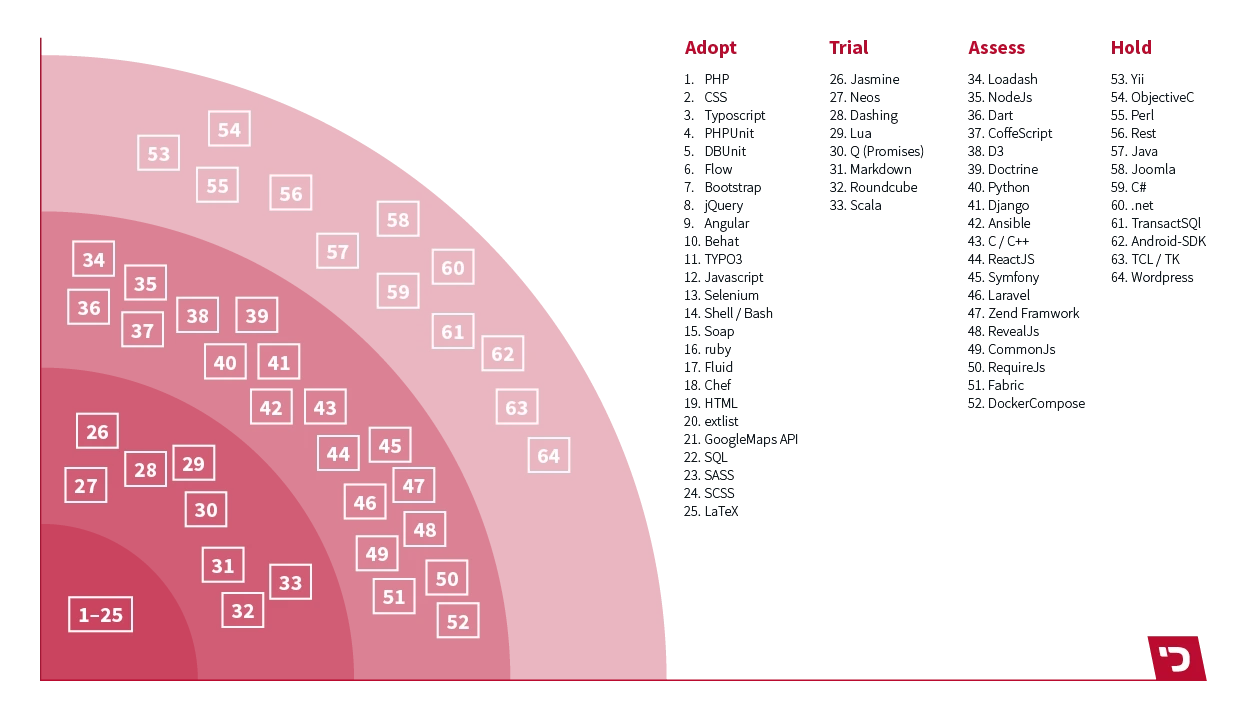
The technology radar is a graphical representation of all the tools and technologies that a developer, a scrum team or even an entire company is working with in a given period. The technologies are classified according to clusters (e.g. front-end or back-end technologies), according to the status of implementation ("on hold", "assess", "trial" and "adopt") and according to changes over time (new status or no change since the last update of the radar). Of course, it also explains what each of these techniques does and why - or why not - developers should use them in the future. What might the whole thing look like? Like this, for example:
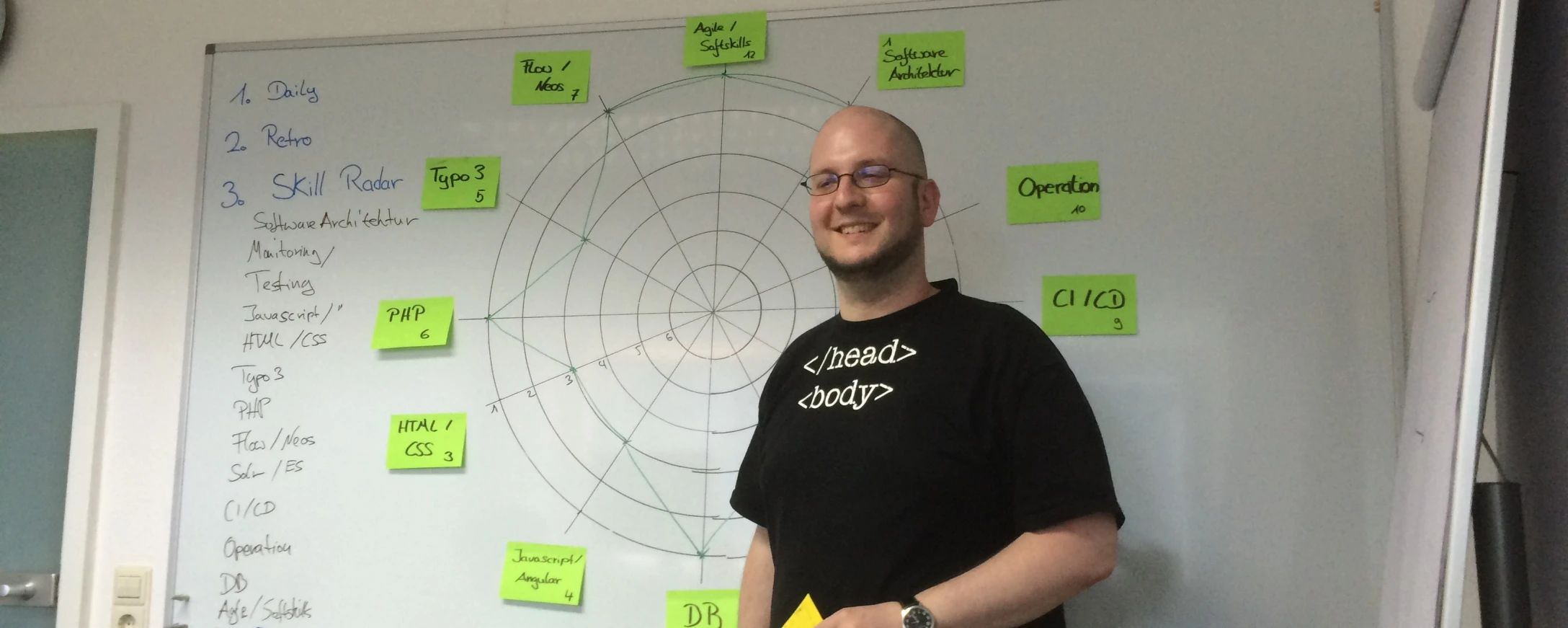
The technology radar is perfectly complemented by the skills radar. While the former shows the technical developments in the company, the latter illustrates the personal skills of a developer, a scrum team or the entire company: which tools and techniques are I/we familiar with, which less so? In which areas am I/we already well positioned, where do I/we still need to do something? A frequently used representation of the skill radar is the so-called spider chart, whereby different subject areas (for example PHP) cross different competence levels (from "never heard of" - inside the chart - to "I can give presentations on this", which forms the edge of the web) - and thus form a kind of spider web. In order to determine the competence level of a developer, self-perception and external perception are compared, i.e.: How do I rate myself? How do others in my team rate me? And where do we meet? This results in a personal skills profile for each developer. If all the individual skills profiles are then taken together, an overall profile of the company is created. This could look like this, for example:
Technology and skills radars are not just pretty to look at, they are also helpful management tools: The technology radar provides an overview of technological developments in the company and documents innovation progress; the skills radar, on the other hand, makes it clear what the developers are capable of, reveals skills gaps and thus simplifies the planning of resources, training and vacation replacements as well as recruitment. The two radars are also helpful tools for marketing: Placed prominently on the website, they illustrate which new technologies the developers are working on, how structured their approach is, what they can do - and therefore how innovative and state of the art a company is. This also applies to punkt.de