Cancel
Start searching

This search is based on elasticsearch and can look through several thousand pages in miliseconds.
Learn more
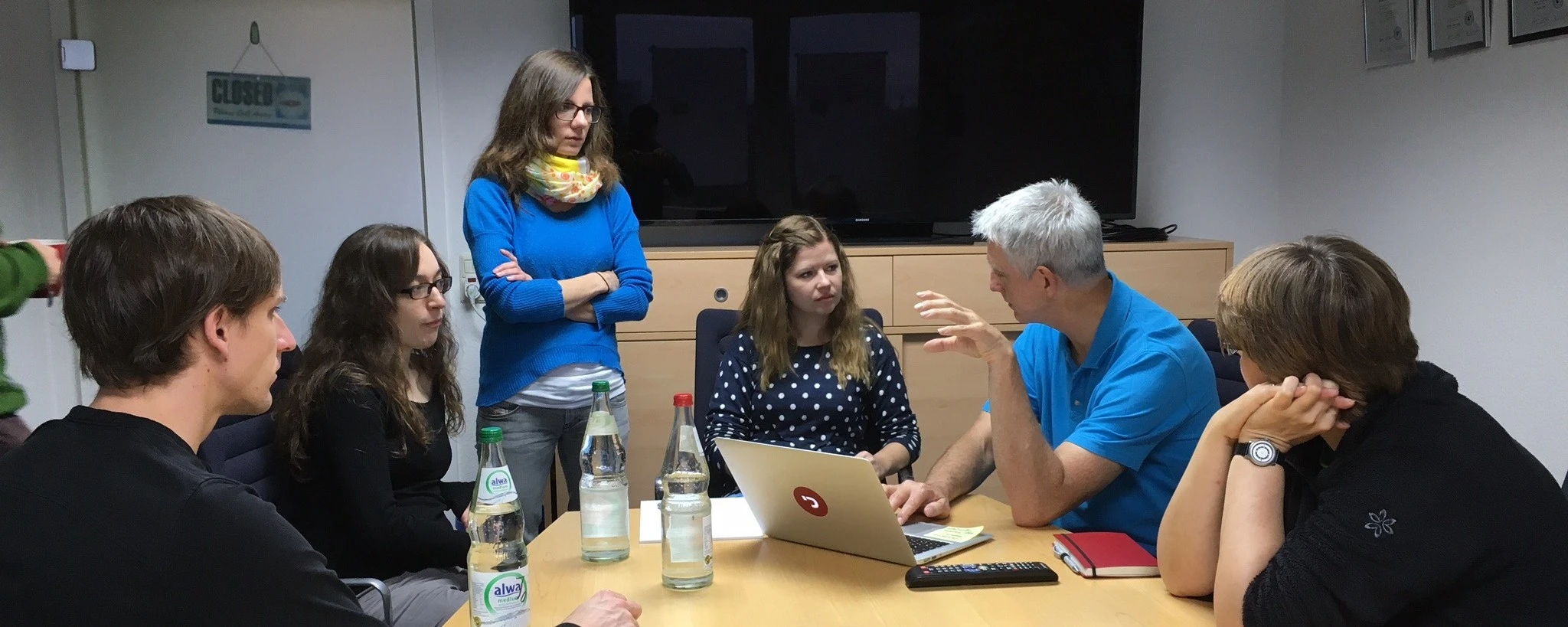
At the beginning of the year, our CEO, Jürgen Egeling, approached the Product Owners and Scrum Masters at punkt.de with an idea: What if we made the entire company agile and took it to the next level?
I admit that this idea confused me, since I believed that agile methods were already firmly established at punkt.de: Didn’t all our client projects already operate using agile methods? Didn’t we have stable development teams, each with its own Product Owner and ScrumMaster? And weren’t we already significantly further along on the path to becoming an agile company than many other web agencies I knew? But I was wrong—and Jürgen Egeling was right. Sure, our development was already agile. But being an agile company requires more than that. In many areas, our CEO was involved in decision-making processes. This gradually turned out to be a bottleneck. With nearly 30 employees, it’s becoming increasingly difficult for our CEO to make well-informed decisions because he isn’t close enough to what’s happening in the teams—and so he simply lacks the necessary information.
Take the example of professional development: If an employee at punkt.de wanted to attend a training course but wasn’t sure whether it would be approved—due to the subject matter, the date, or the cost—they would ask the CEO. Yet the decision is much better left to the teams.
Regarding the subject matter: As already described in the blog post on the Technology and Skills Radar, we’ve tried to assess the skills of individual developers and visualize them using a Skills Radar. This makes their strengths and weaknesses clear—and thus enables the teams to independently assess whether the training will benefit their own team
Regarding the schedule: The team itself has the best insight into its own deadlines. And can therefore judge better than the managing director whether a training session is feasible given the schedule or not
Regarding costs: Admittedly, here at punkt.de, we have a very experienced CEO in Jürgen Egeling, who often has a good sense of the cost-benefit ratio of a training course. However, he’s not alone in this. And colleagues from the development team, in particular—who have already participated in many training sessions—often know even better what’s worth it and what isn’t.
Of course, training sessions are just one of many examples: From water orders to employee salaries—there are many things that need to be restructured on the path to becoming an agile company. Too many to tackle on our own: That’s why Dr. Jürgen Hoffmann and Heiko Stapf from the agile consulting firm Emendare are supporting us as coaches.
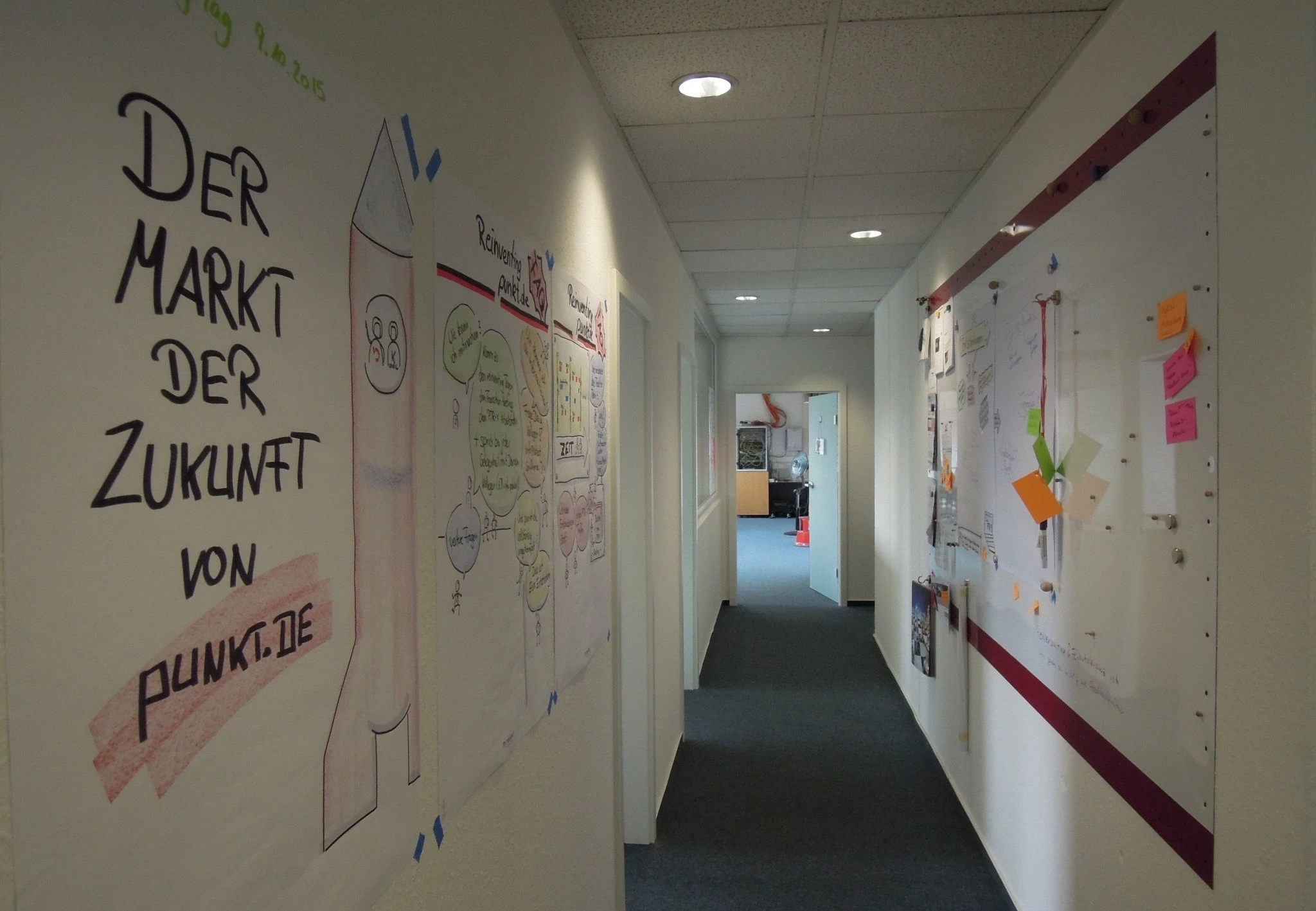
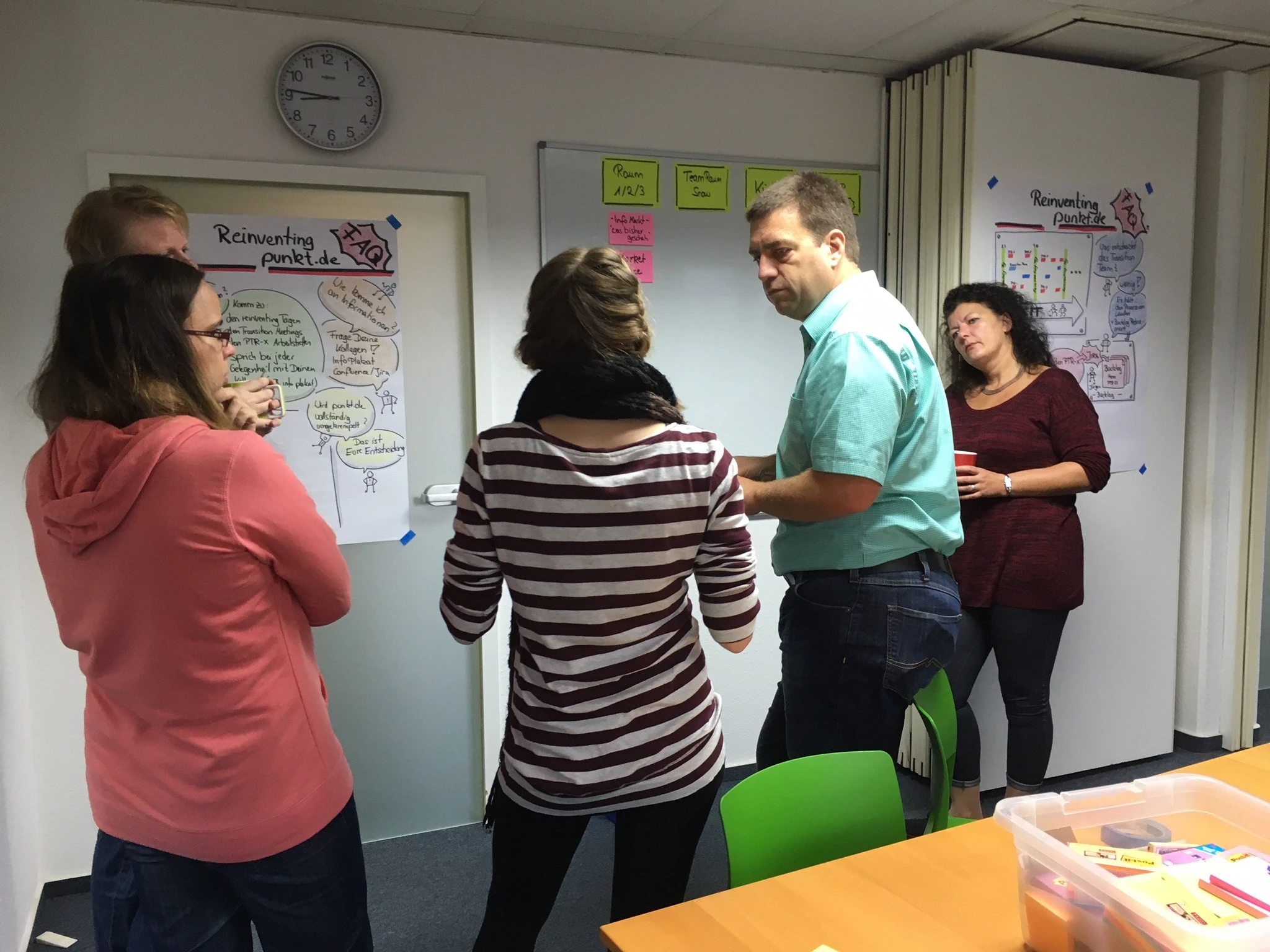
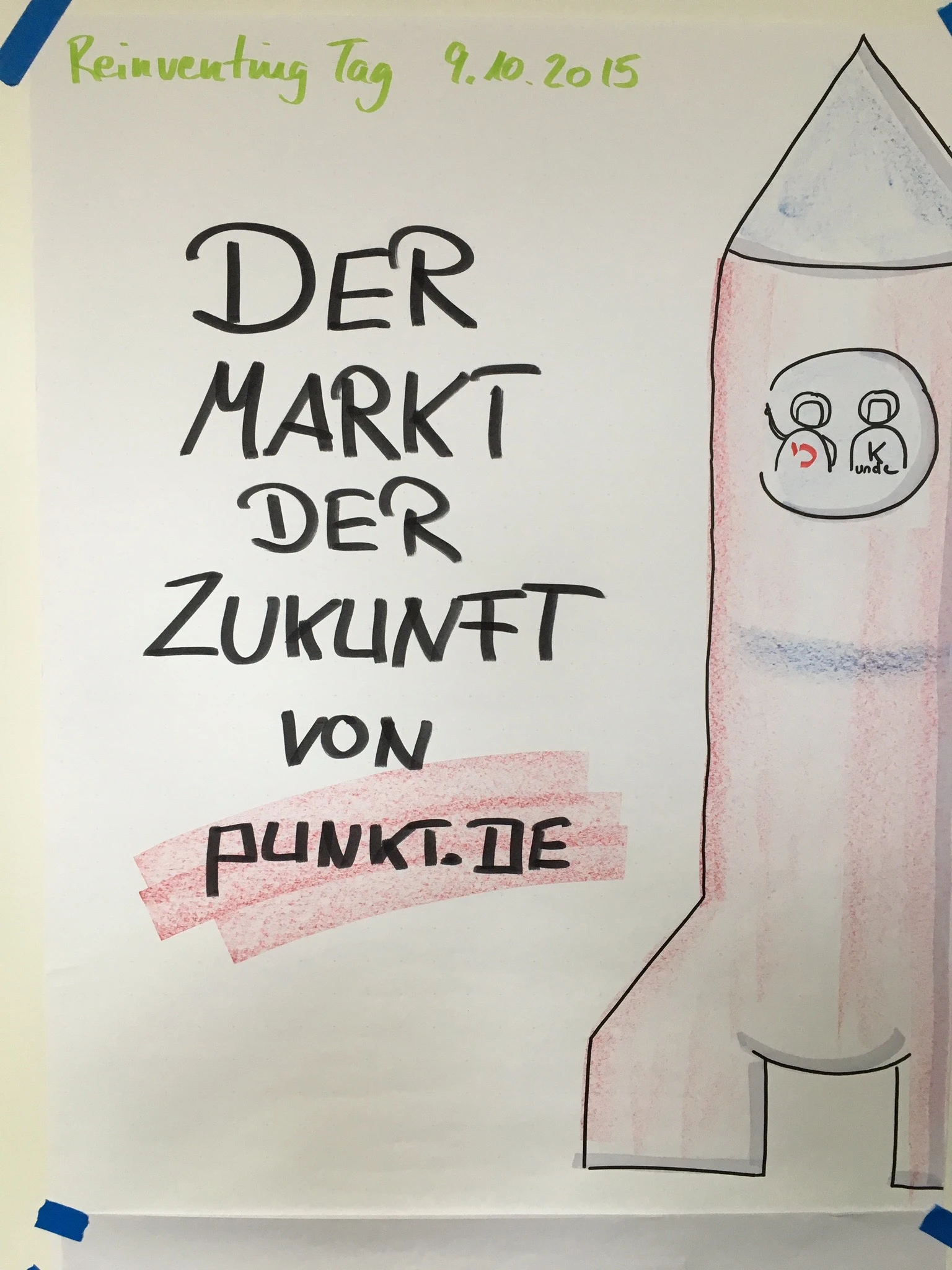
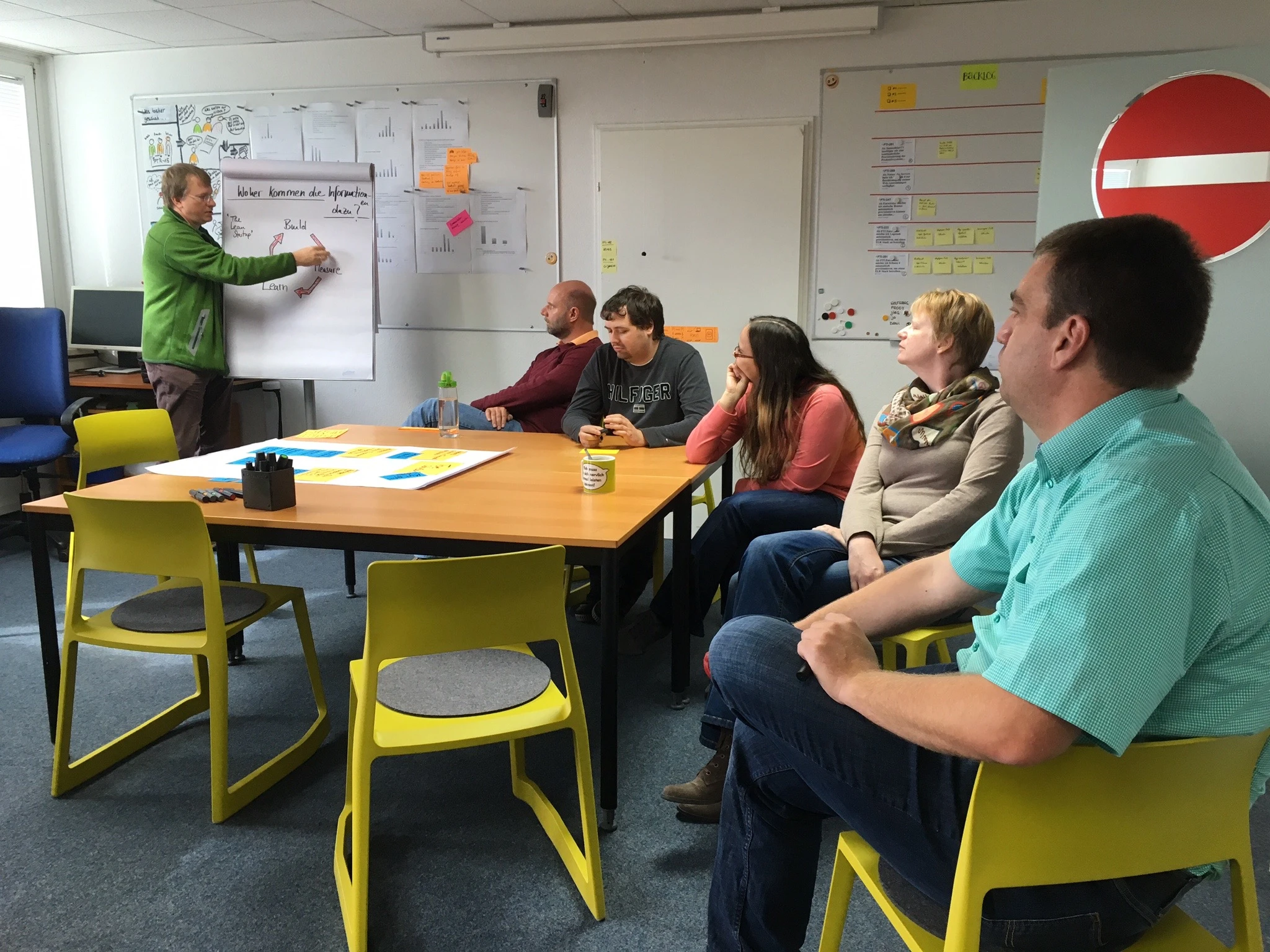
And what exactly do the individual steps look like? Well, first, the entire company came together to formulate a common goal: “The future of punkt.de —centered on self-organized teams that take responsibility for one another.” Based on this goal, various backlog items were then developed—ranging from questions about decision-making processes to our feedback culture and communication structures, all the way to strategies and technologies. In addition, a transition team was formed that meets at irregular intervals to drive forward the “reinvention” of our company and refine the Reinventing Backlog. Apart from that, the pending tickets are regularly discussed and decided upon in small groups. Last Friday, the entire company came together for the second time. Interim results were presented, and an OpenSpace session was held to address some open questions.
But we’re not quite there yet. We’ll be taking a few more steps in the coming weeks—and we’ll share our results here. A presentation on the topic at T3Con15 in Amsterdam is also on the agenda. So: stay tuned!