Cancel
Start searching

This search is based on elasticsearch and can look through several thousand pages in miliseconds.
Learn more

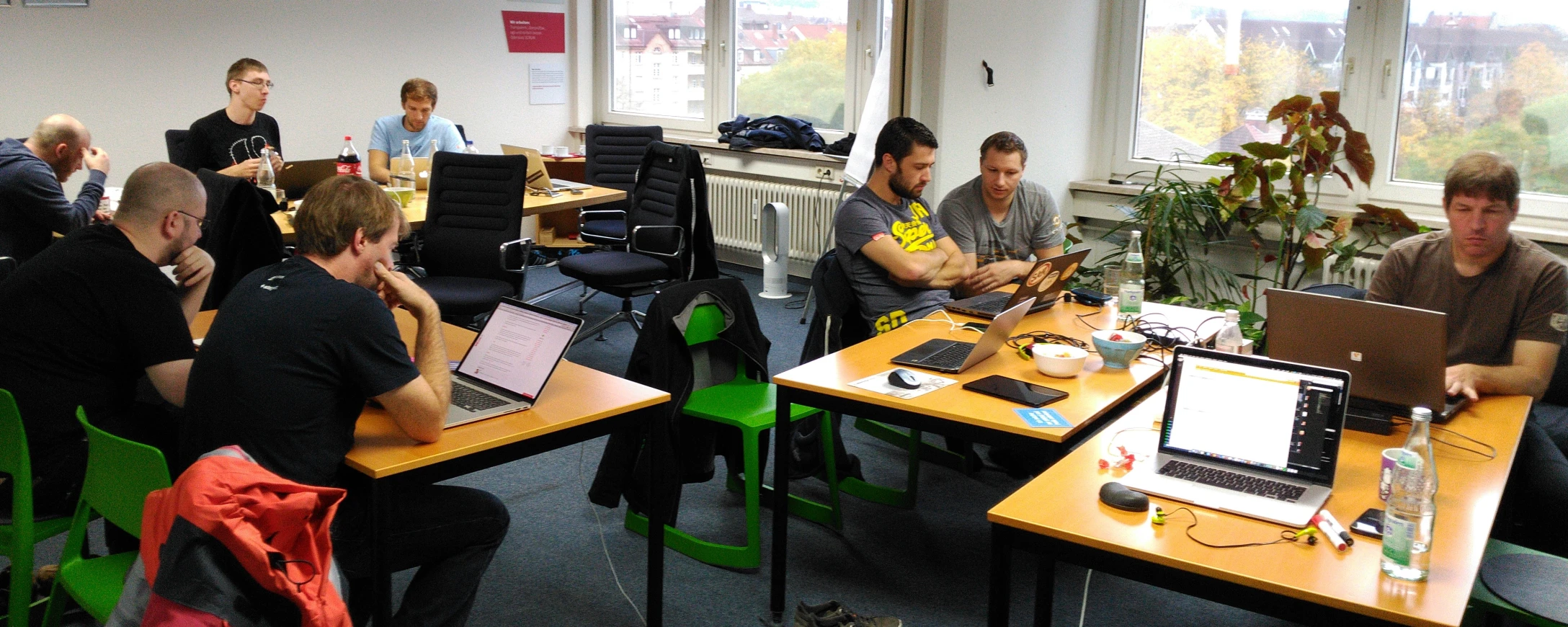
About 14 hardworking volunteers gathered at our offices to carry out maintenance and update work. Among other things, the goal was to revamp the automatic server provisioning, set up a development environment for typo3.org, and update the typo3.org website. Michael Lihs and I were assigned a special task: to evaluate a comment system that offers similar features to Disqus but can be self-hosted.
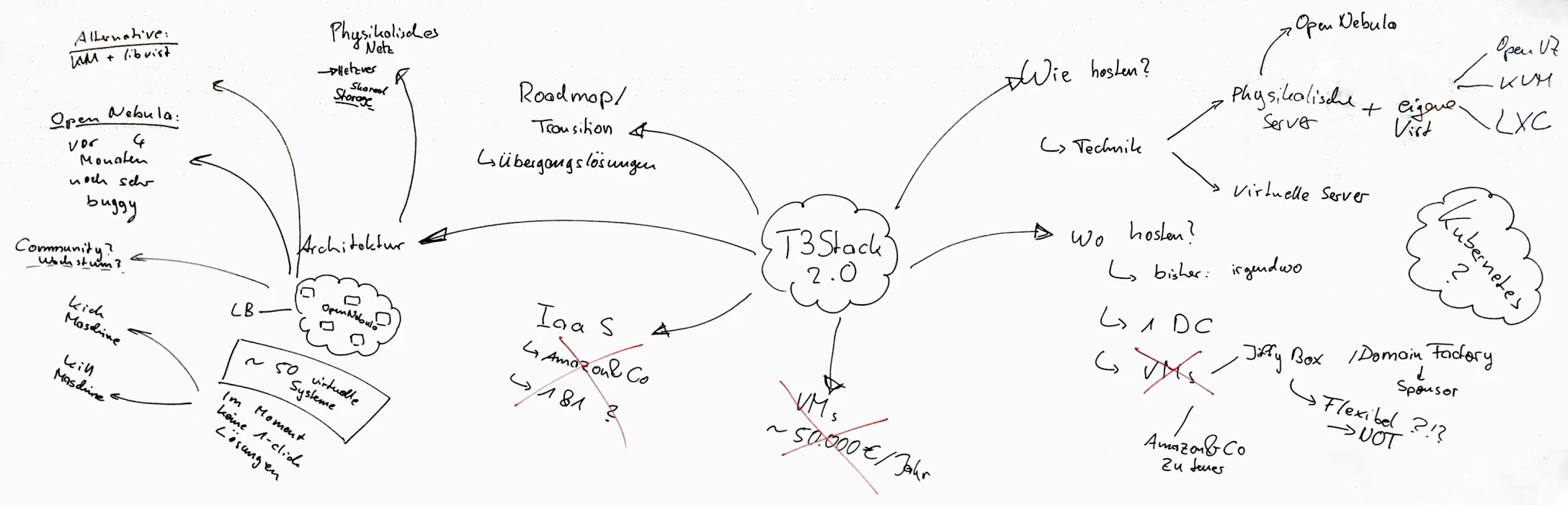
Each of the teams faced a major challenge: The TYPO3 server provisioning had been implemented by people who are no longer actively involved in the project. The server team therefore had to familiarize itself with the existing setup and decide whether it should or could be reused, or whether a new foundation should be built that would be more intuitive for new team members to use. This discussion was revisited several times over the weekend until we finally settled on a hybrid solution.
The typo3.org team had two major questions: How can we provide developers with an up-to-date version of the website without having to migrate all live users and all TYPO3 extensions? And how can a website built with older technologies be split so that one part (which will be updated later) continues to run on the existing system, while the other part is available using newer technologies? During these discussions, we were able to provide some input based on our experience with client projects and help plan the corresponding concepts. Implementation will take place in the next step.
Work on the comment system faced entirely different challenges. The plan was to set up a server using the Discourse tool. Michael and I then intended to extend it with features such as login via typo3.org and adapt the layout to TYPO3 colors. Unfortunately, we discovered that some crucial features could not be implemented easily. Although we contacted the developers behind Discourse to see if we could get these features implemented, we also evaluated other, similar comment systems in the meantime. In doing so, we unfortunately noticed that while many systems replicate some of Disqus’s functions and implement them well, they unfortunately never meet all the requirements needed on typo3.org (single sign-on fortypo3.org users,comment field below a post (no redirection to the comment tool), customizable layout of embedded comments). There are now three options for moving forward: either we set up our own commenting system, we use the Discourse architecture and build our own front end on top of it, or we ask the TYPO3 community once again whether Disqus might be the best solution—despite the third-party hosting. This is because, since the question was last raised, new tools and workflows have become established in the community, thanks to which the issues with Disqus simply no longer pose a problem.
Despite all the work we had to do, there was still plenty of time for good conversations. This led to a fair amount of knowledge sharing, thanks to which (hopefully) everyone was able to take away something useful. For me personally, a highlight was a discussion about workflows for the Mac task launcher Alfred, which inspired me to search the corresponding repository for useful extensions. For me, this sprint was the first time I’d participated in an open-source community beyond just making simple code changes. It was definitely a lot of fun, and despite all the challenges, the atmosphere remained relaxed the entire time. You could really feel that people were highly motivated to advance “their” systems and TYPO3—and that motivation was very contagious. I’m glad I was able to be there, and I’ll definitely participate in future events.