Cancel
Start searching

This search is based on elasticsearch and can look through several thousand pages in miliseconds.
Learn more
We had plenty of ideas for this “Just Do It” Day as well, though unfortunately not all of them could be implemented—after all, each person can only work on one topic. In addition to highly technical topics, Scrum and other subjects are always on the agenda—and this time, made in, our partner agency that specializes in design, joined us for the first time. After all, Just-do-it-Day is meant to be not only a platform for testing things out, but also for strengthening the partnership between the agencies. The following topics were the most popular:
The TYPO3 content management system is currently available in its eighth version. However, since no client projects have been migrated to TYPO3 8.0 yet, the Just-do-it-Day was a great opportunity for those who hadn’t yet had a chance to try out TYPO3 8.0 to do so now. The bottom line: It’s fast, it has a great responsive layout—just like TYPO3 7.6 LTS—and our developers like it. We’re definitely looking forward to future versions with further improvements.
We’re already using layout testing in production, but there’s a wide range of tools available. A day like Just-do-it-Day is therefore an excellent opportunity to try out additional tools. We tested Galen and we like it. Galen is particularly well-suited when it comes to performing layout testing on a client’s live instance. Galen is one of the few tools that doesn’t perform direct screenshot comparisons; instead, it checks whether specific, predefined design elements are positioned correctly and whether they’re even visible. This is helpful for usability and development.
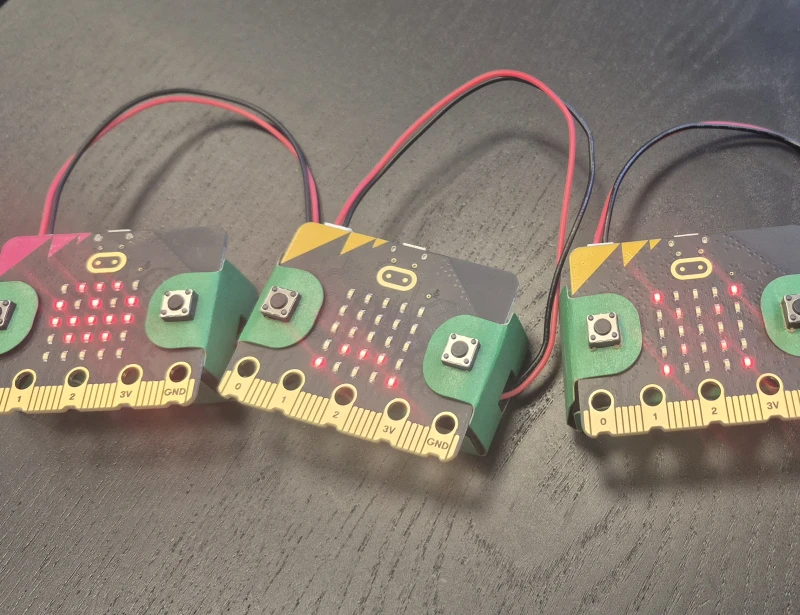
“Something about beacons”—that was the original topic. There were already plenty of ideas for potential applications. At the same time, Florian Franke from made in came up with the idea of having us explore the topic of bots. In 2016, bots are an exciting innovation for initial support contact or the configuration of services. Examples include the Slack bot and the Telegram bot. Ultimately, we decided to combine the two and streamline the project so that it could be completed in a single day. That’s why, in anticipation of our company’s 20th anniversary, we programmed and designed a bot that enables conversations with people connected to the company’s history—in our example, Kasper Skaarhoj, the inventor of TYPO3. The bot is activated when you come within range of a beacon, which is placed on a table. The conversation can be conducted on a mobile device by tapping on pre-written responses.
At this year’s Just-do-it-Day, we also had a 3D printer—though more for fun than for client projects. But it was still a lot of fun. Using our 3D printer, we printed an SD card toaster, a vase, and a few cable clips as small giveaways for the recent Inspiring Conference.
We’ve also made some improvements to our hosting. Over the past few weeks, we’ve tested many new tools and techniques on our hosting infrastructure. We’ve now installed the reporting tool on our Chef Server to see how it can help us. Following the test during Just-do-it Day, the system is now in production and provides us with a reliable and clear overview of the status of the nodes communicating with the main server. If a provisioning process fails, we can immediately see which server is affected and respond accordingly.
Most of our development work now takes place within Vagrant environments. To start a project within Vagrant, you need a so-called base box, which contains the desired target operating system and a few minimal adjustments for working with Vagrant. However, the FreeBSD boxes available from Hashicorp—the company behind Vagrant—all still use the original BSD file system, “UFS.” Since we absolutely need the more modern ZFS for some of our projects, we had to build a suitable box ourselves.
And what tool would be better suited for this than… Vagrant? By the end of the day, we had a Vagrant project that, with a single command, downloads a standard box from Hashicorp, starts it up, and uses it to build a ZFS-based box—mission accomplished.
Last but not least: In addition to all the technical topics, there was also a team that focused on the process of peer consultation and support and discussed the possibilities for implementing it in our company. To this end, the method was tested using a case study and was found to be effective. To be able to apply the method in the future, it was decided to first practice it among the Scrum Masters. This will ensure that it can be applied correctly, in a goal-oriented manner, and with confidence.
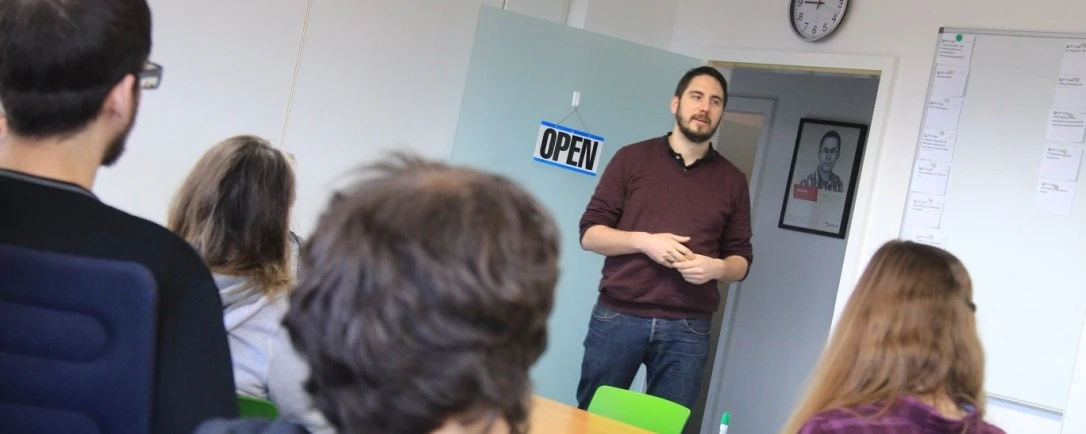
All in all, the Just-Do-It Day was once again a successful event where we learned a great deal. And to further enhance the transfer of knowledge, we concluded the day by presenting all the results to the entire workforce.