Cancel
Start searching

This search is based on elasticsearch and can look through several thousand pages in miliseconds.
Learn more
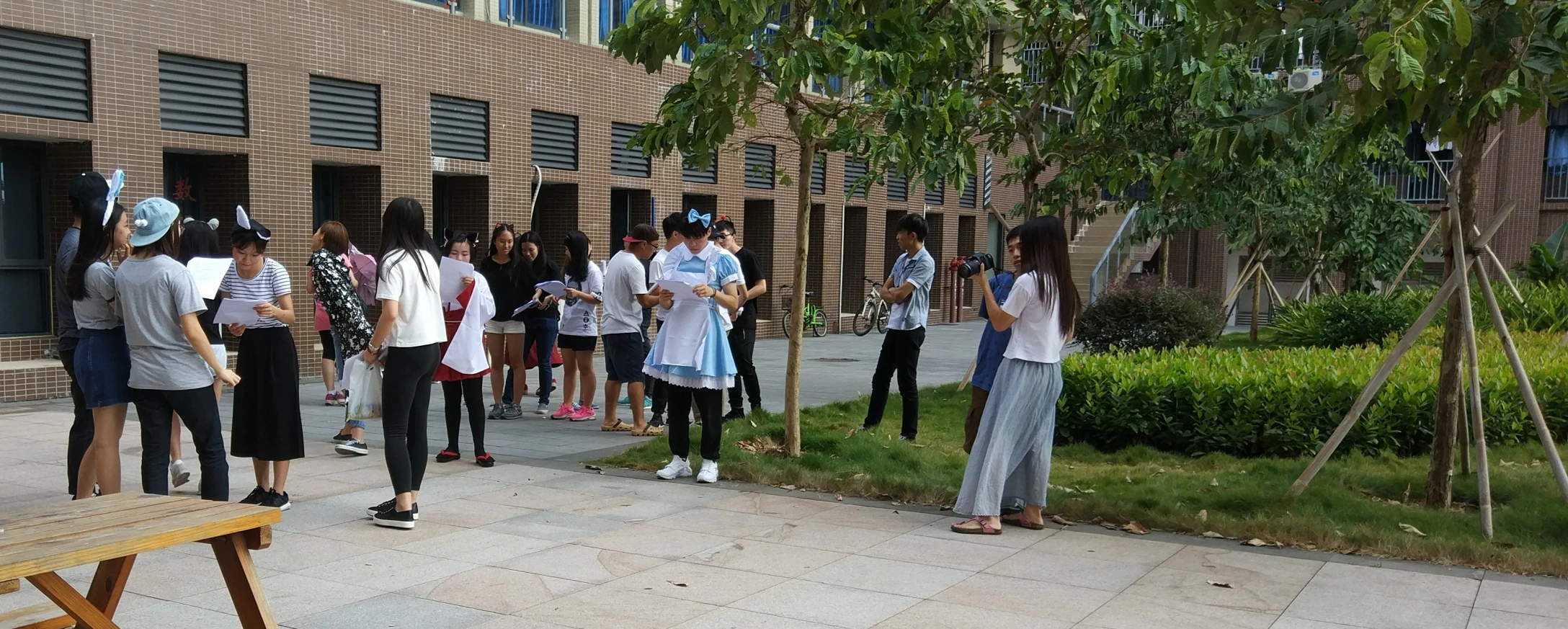
I’ve been living at Jinan University in China for almost two months now and am spending my fifth semester there as a study abroad student. Jinan University is one of the most prestigious and top-ranked universities in the region. For many Chinese high school students, admission to Jinan University is the crowning achievement of what is arguably one of the most challenging educational systems in the world. But what awaits them once they get there? And as a European student, how do I rate studying at a Chinese university?
First, though, I’d like to talk about the university’s two largest campuses and how they differ.
Jinan University has a total of four campuses. Three of them are located in Guangzhou, and one is in Shenzhen. The largest and most important campus is the Main Campus in the Tianhe District in central Guangzhou. In addition to 20 student dormitories, apartments for the “general public,” the university hospital, various colleges, and academic buildings, it also houses one of China’s largest university libraries, sports facilities, restaurants, and shops, as well as the university’s affiliated primary and high schools. This campus is cramped and crowded. Narrow streets and alleys wind through the entire grounds like a labyrinth. Late into the night, this maze is filled with students, families, and other residents who pass the time engaging in various sports activities, enjoying a meal at one of the many restaurants, or simply relaxing in one of the campus parks. All of this gives the Main Campus a charming atmosphere and offers the opportunity to observe a cross-section of Chinese society “in action.”
I would have loved to live on the Main Campus during my time in China. However, due to a restructuring of undergraduate student housing, this wasn’t possible, and I had to settle for a room on the 12th floor of a dormitory on the South Campus.
The South Campus is the exact opposite of the Main Campus. It is located in Panyu District, a district in southern Guangzhou, about a 30-minute drive from the Main Campus, well outside the city center. It opened in 2012, making it the newest campus of Jinan University. However, the grounds are significantly larger than those of the Main Campus; only a small portion is developed. Instead of a crowded atmosphere, there is therefore plenty of space. Like the Main Campus, the South Campus has a fairly large library, several student dormitories, sports facilities, a supermarket, and a handful of fast-food outlets. There are no full-service restaurants, apartments for “non-students,” or other schools here. Due to their age and the relatively low population density, most of the buildings and parks still feel very sterile and empty.
As one of the few universities in China, Jinan University has an international school where classes are taught in English. The professors’ English proficiency varies drastically from one instructor to another. I’ve had professors who deliver lectures in perfect English, but there have also been the opposite—professors who lecture only in broken English and often drift into Chinese. All of them were very friendly and helpful and were more than happy to assist with questions or personal interest in related topics. I’m taking a number of courses from the third and fourth years of study, ranging from pure computer science courses to business-related subjects like law and project management.
Despite the small class sizes, the lectures are very lecture-based. Interaction with the students—who, to my regret, are very uninterested—hardly takes place during the lecture. Cell phones are tolerated in all lectures and are used constantly by all students. This general lack of interest was alarming and nothing like my experiences at the DHBW. The difficulty level of the course material varied from moderate to very challenging depending on the instructor and subject, but it is comparable to the content taught in Germany. Unlike at my German university, all lecturers assign homework every week. These assignments are very extensive and significantly increase the workload. On top of that, there are several “final projects” that I had to work on alongside my exams during the exam period.
Other things I noticed in class:
A very friendly rapport between instructors and students
Topics are taught from a Chinese perspective (WTO & Law). This led to interesting discussions about a wide variety of issues related to free trade, which China is now also beginning to experience
Deadlines may(!) be met
Looking back, studying at a Chinese university was a very interesting experience. I was able to test all my preconceptions to see if they were accurate and found that Jinan University actually surprised me in a positive way. However, there are also many things—such as the demotivating learning environment or the outdated teaching methods and facilities—that make me look forward to studying at a German university again soon.