Cancel
Start searching

This search is based on elasticsearch and can look through several thousand pages in miliseconds.
Learn more
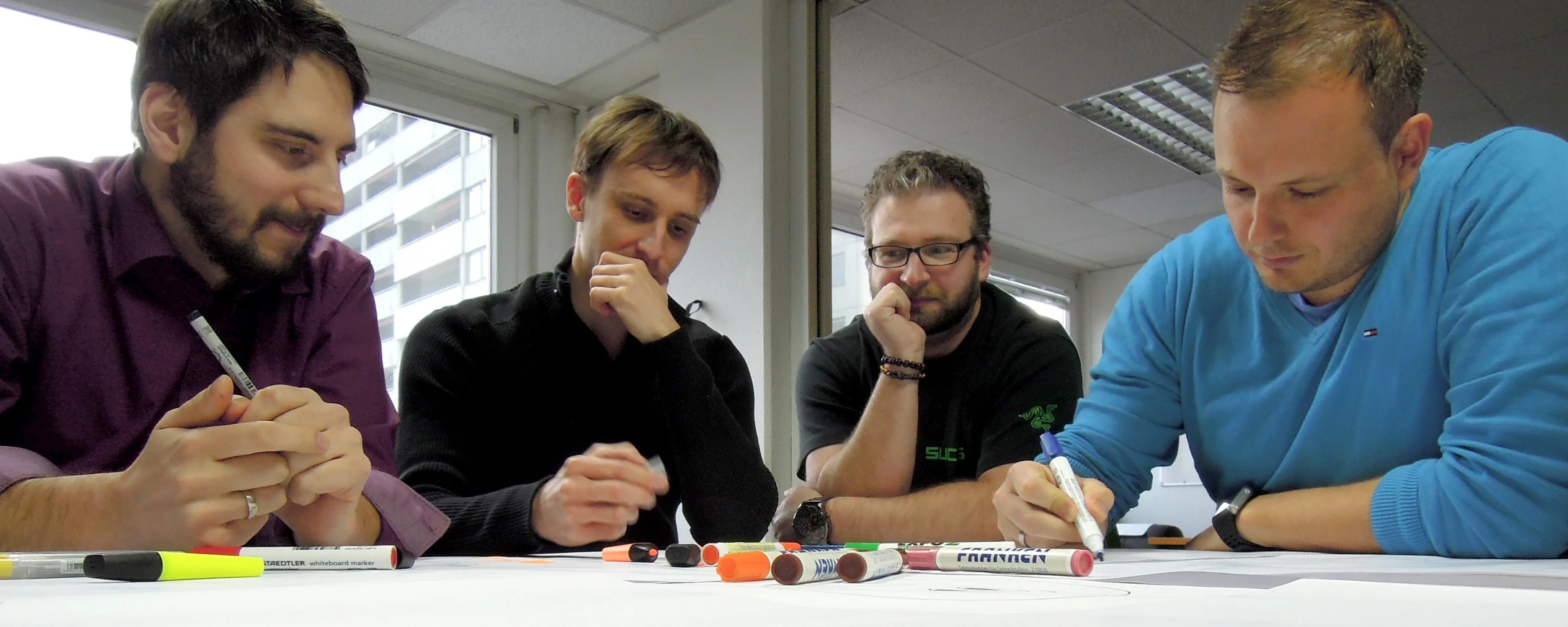
Complex projects with many influencing factors, in particular, require constant adjustments to changing conditions throughout the project. Examples of changing conditions include security, SEO, new customer requirements, or staff changes. Under such complex conditions, making appropriate decisions and taking appropriate actions requires the continuous review and reassessment of the project’s status and requirements. Additionally, knowledge transfer within the team is greatly enhanced, especially when not all team members are working on the same project.
During the retrospective, the team is given the space to step back from day-to-day operations and view the project from a meta-level perspective. This brings to light issues that might otherwise be overlooked in the day-to-day routine. Problems of any kind can be addressed openly. The retrospective makes it possible to develop appropriate measures for problem-solving and to improve collaboration. Furthermore, differing opinions among team members are brought to light early on, thereby preventing frustration within the team.
For this reason, the retrospective is firmly anchored in the Scrum cycle as a regular meeting for the development team, including the Product Owner, and is typically facilitated by the team’s Scrum Master. To ensure a continuous, evolutionary improvement process, a sprint retrospective takes place after every sprint. In “ punkt.de,” an iteration—that is, a sprint—lasts two weeks. This gives teams a regular opportunity to openly discuss all the problems they faced or are still facing during that time. Another name for this same principle is “lessons learned.”
However, it can also be useful to expand the group of participants in order to discuss additional approaches and specific requirements directly with everyone involved in the project. This might mean, for example, that a Scrum team invites a stakeholder to the sprint retrospective. A project retrospective can also involve several dozen people, for example, when the project is being wrapped up. It’s often worthwhile to step back to a meta-level with everyone involved in the project to gain a shared understanding of a complex project and align everyone’s perspectives—and not just at the end of the project! Throughout the course of a large project, everyone needs to periodically refresh their understanding of what the shared project goal looks like.
Regardless of what we may discover, we sincerely understand and believe that every person, given the circumstances, has done their best with the knowledge, resources, and individual abilities available to them.
It is very common to conduct a retrospective in five phases (according to Esther Derby and Diana Larsen; see *Agile Retrospectives*), each of which serves a specific purpose. It is recommended to include an introduction (Intro) before these five phases.
Everything we discuss here stays between us.
Introduction: Welcome the team, review the agenda, and help everyone settle into the safe space. Typically, the Vegas Rule and the Prime Directive are mentioned. This means that everything discussed or that happens during the retrospective stays in the room. Unless, of course, the team decides to share the results publicly. The Prime Directive aims to foster a constructive and respectful atmosphere. This includes maintaining an open and unbiased mindset; assigning blame has no place here.
Every retrospective is different. Even though the phases of the retrospective are followed each time, the Scrum Master can structure them in completely different ways. Depending on the team’s mood or the issues at hand, methods are varied and adapted, and questions are phrased differently. This not only brings different insights to light but also provides the team with variety. Instead of a“that’s just how we’ve always done it” mindset, retrospectives foster a culture of joyful improvement and continuous development.