Cancel
Start searching

This search is based on elasticsearch and can look through several thousand pages in miliseconds.
Learn more

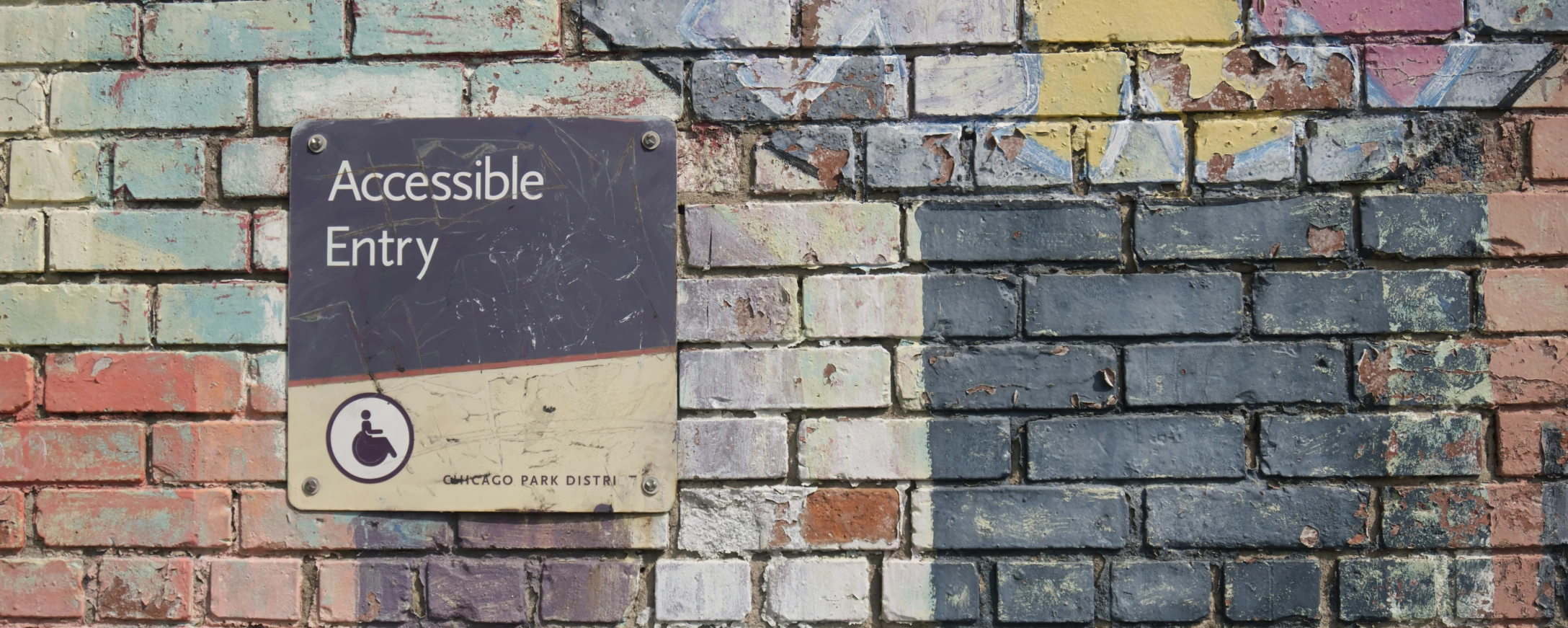
In our increasingly digital world, access to the Internet is no longer a luxury but a necessity. For people with disabilities, however, this access can be limited by numerous barriers.
Web accessibility is therefore not just a matter of technology, but also one of social commitment and legal obligation. With the upcoming legislative change in 2025—the Accessibility Enhancement Act (BFSG)—it is high time for companies and web developers to make their websites and online services accessible to everyone.
Web accessibility means that websites, tools, and technologies are designed and developed so that people with disabilities can use them.
This encompasses a wide range of disabilities, including visual impairments, hearing impairments, motor impairments, and cognitive impairments. Temporary limitations should not be overlooked either: a broken arm, for example, can also make it difficult to use a keyboard and mouse. And last but not least, situational limitations (e.g., holding a child) are also possible reasons for restricted use.
In Germany alone, it is estimated that there are just under 8 million people with disabilities. That is nearly 10% of the population (Source: Federal Statistical Office).
To ensure accessibility, web content must comply with the Web Content Accessibility Guidelines (WCAG). The standard currently used internationally is WCAG 2.2 (https://www.w3.org/TR/WCAG22/) and is constantly being updated. WCAG 2.2 comprises a total of 55 criteria derived from the following principles:
For example, text should be readable by screen readers, videos should have captions, and all functions should be accessible via the keyboard.
Meeting these success criteria requires effective coordination between the perspectives of design and layout, user experience, technology and development, and editorial content. Authors, developers, and designers play a key role in creating accessible websites and content.
Does that sound pretty complicated? It doesn’t have to be. Let’s sit down together and figure out how we can work together to make your website compliant with the Accessibility Enhancement Act. You can reach us at: kaffee@punkt.de
Products and services are considered accessible if people with disabilities can find, access, and use them in the usual manner, without undue difficulty, and generally without assistance from others.
Implementing accessibility features can be as simple as adapting the website design to accommodate color blindness, or as complex as developing voice interface systems for users with motor impairments. Future solutions will also include the use of specific HTML and ARIA landmarks, providing alternative text for images, and ensuring adequate color contrast.
For further insights into this topic, we also recommend the blog post by our partner agency made in, which explores web accessibility from a design and UX/UI perspective.
Some companies may be reluctant to incur the costs and effort involved in adapting their websites.
However, studies show that improving accessibility is not only ethically necessary but also economically beneficial, as it enables access for a broader user base. Online stores, for example, can expand their target audiences and thereby grow their customer base.
In addition, there are potential penalties that may result from noncompliance with the Accessibility Enhancement Act. In addition to substantial fines, it may even be possible to prohibit the operation of the website.
All in all, it’s important to note that it makes sense to create a web presence that is accessible—both for your own competitive advantage and for the website’s users!
With the Accessibility Enhancement Act (BFSG) set to take effect in 2025, web accessibility will transition from a recommended practice to a legal requirement. This step is crucial for creating an inclusive digital world in which everyone can participate without restrictions.
It’s time for web developers, designers, and website operators to take the necessary steps to make their online offerings accessible to everyone.
Please feel free to share your thoughts and experiences regarding the implementation of web accessibility with us. Let’s work together toward a more accessible digital future.
You can reach us at: kaffee@punkt.de
Keywords: accessibility , web development, WCAG, inclusion, digital accessibility, Accessibility Enhancement Act (BFSG), ARIA landmarks