Cancel
Start searching

This search is based on elasticsearch and can look through several thousand pages in miliseconds.
Learn more
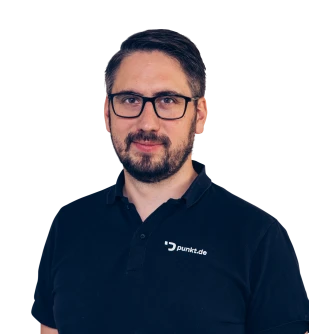
When I think of digital sovereignty, the first thing I often think of is what I don't want: the reflexive use of tools like the Google Suite that I see in many organizations. For me, this is a symbol of how quickly companies become dependent without realizing the consequences.
This also shows a typical misunderstanding: digital sovereignty is often defined by renunciation or dogma. Sometimes it almost seems like "being a digital vegan" - many people know that it would be socially better, but it seems uncomfortable, you have to justify yourself and you feel like you can no longer simply go along with everything.
It's not about running everything strictly open source or keeping every DNS record in your own hands. For me and for us at punkt.de, digital sovereignty means something else: making conscious decisions. Understanding which data is processed and how, which you want to protect in particular - and where it is completely sufficient to rely on standards or established systems.
A lack of digital sovereignty means one thing above all for SMEs: dependency. And this often only becomes apparent when it is actually already too late.
One example from our own day-to-day work is the topic of Jira and Confluence. Back in 2012, we at punkt.de decided to switch from Redmine to Atlassian products. We were enthusiastic about the possibilities back then - and still use them intensively today. However, Atlassian is now forcing its customers into the cloud. This means significant price increases, no more freedom of choice and the obligation to store sensitive data in an American cloud.
The problem is not just the cloud. The real problem is the vendor lock-in. It is possible to switch back or to another system, but only at extremely high cost and effort. Our data sovereignty is massively restricted here.
The situation is completely different in another area: mail and calendar. Here, too, we rely on Microsoft 365 - but with one key difference. Mail and calendar are based on open standards (IMAP, CalDAV, etc.) that have been tried and tested over many years. This means that if we decide one day that Microsoft no longer suits us, we can easily switch back to open source solutions or other systems. Our data is portable and the sovereignty remains with us.
These two examples show very clearly what digital sovereignty is all about: not dogma, but the ability to act.
What sets us apart at punkt.de is the attitude with which we approach problems. Our default approach is as follows:
This does not mean that we dogmatically place every function or every project under the maxim of data sovereignty. Rather, it means that we consciously weigh things up: Which data is critical, where do we need maximum sovereignty - and where is pragmatic integration sufficient?
Our first love is still open source. Why? Because open source means independence and security. Freedom to understand and adapt systems and - when the going gets tough - to continue operating them ourselves. For us, this story began early on: in the 2000s, a manufacturer discontinued the CMS that we were using at the time. We had to manage free migrations for our customers. A painful experience - and the beginning of our journey with TYPO3.
TYPO3 was an eye-opener: no matter what happens to the community, we retain access to the data. We can operate, expand and customize the system ourselves. This experience has shaped us to this day. Open source is therefore not just a business model for us, but a conviction. Not because it is "free" or because you "have to" do it ideologically - but because it gives companies the freedom to make sovereign decisions.
And we are constantly amazed at how powerful open source products have become. Whether content management, automation or collaboration: there are now open source solutions for many problems that can easily compete with the big international players.
Reality is never black and white. Two examples from our work illustrate this:
The crucial thing is: we weigh things up. We look at which data streams are critical, which degrees of freedom are necessary and where pragmatism is more important than ideology.
In discussions with decision-makers, we encounter two misconceptions particularly frequently:
Our attitude to digital sovereignty is not born of fashion, but of experience. Over 20 years ago, we learned what happens when you rely too much on proprietary providers.
Since then, we have been helping companies to remain sovereign with their data - with open source, with European solutions, but also with international tools if it is the best decision. The decisive factor is not ideology, but the freedom of the company to be able to act at all times.
I am convinced that digital sovereignty will become even more relevant in the next five to ten years. Regulatory requirements will increase, markets will impose stricter requirements and it will become clear with the use of AI at the latest: only those who have sovereignty over their data can remain innovative.
For SMEs, this means that digital sovereignty is not a niche topic. It is a strategic task.
Digital sovereignty is not a dogma, a renunciation project or a trend. It is the ability to make conscious decisions and handle data in such a way that you remain capable of acting today and in the future.
At punkt.de, we have been living this attitude for over 20 years. We think first in terms of open source, then European, and we turn to international solutions when it makes sense. Always with one goal in mind: to give our customers the freedom to keep their data under control - and thus move confidently into the digital future.