Cancel
Start searching

This search is based on elasticsearch and can look through several thousand pages in miliseconds.
Learn more

Many companies are currently grappling with the question of how to make their web tracking and analytics compliant with data protection regulations and future-proof. While Google Analytics—particularly the latest version, GA4 —is widely used, it remains in a legal and technical gray area. Several data protection authorities in Europe have confirmed that GA4 cannot be operated in compliance with the GDPR in its default configuration. This creates risks that are difficult to quantify in the long term.
At the same time, teams want a tracking system that offers professional analytics features while still allowing them full control over their own data. This is exactly where Matomo comes in. The open-source platform is used worldwide, is technically mature, and allows companies to conduct web analytics under their own control—without relying on U.S. providers.
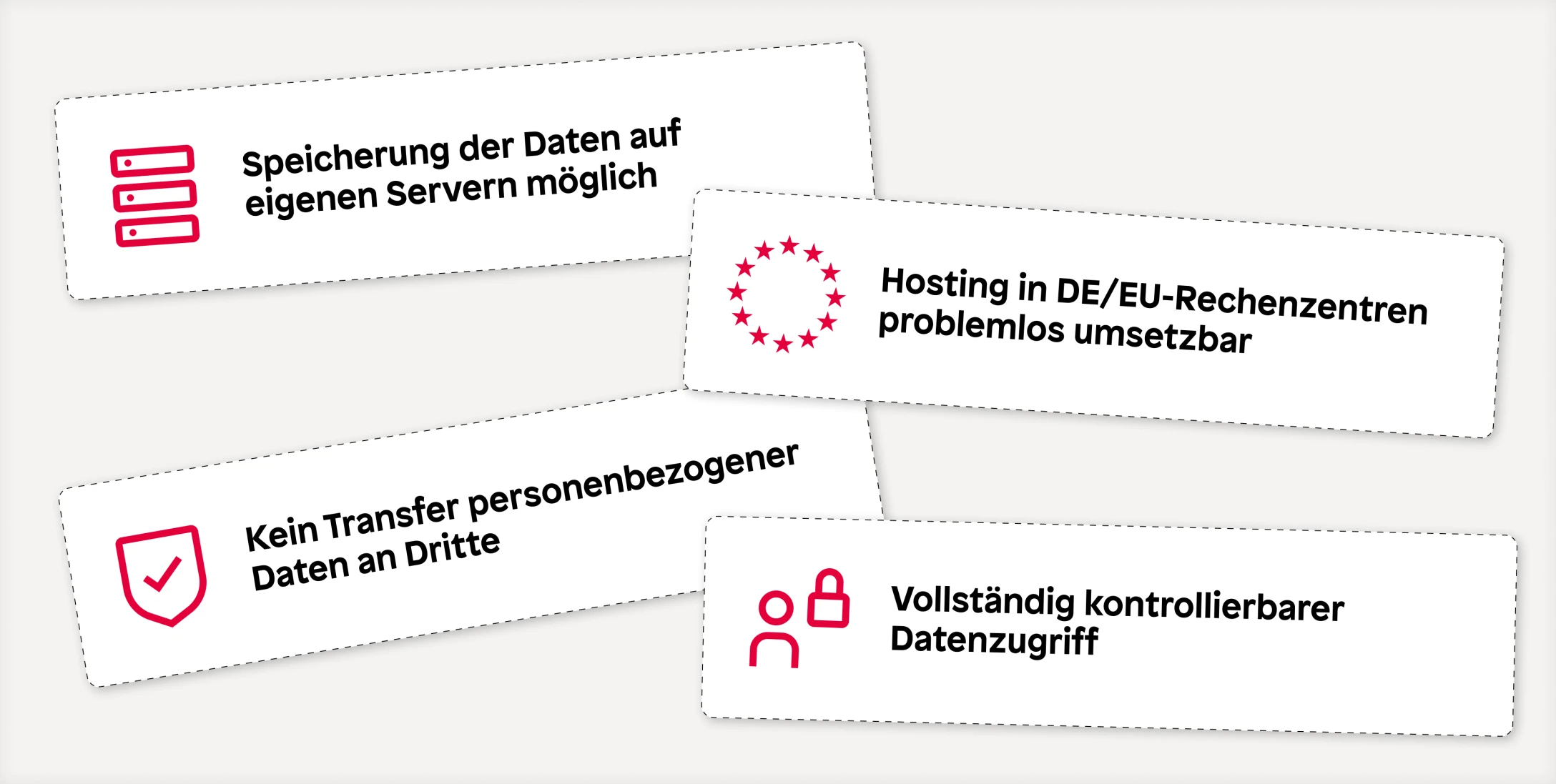
The fundamental difference between Matomo and GA4 lies less in the user interface than in how data is handled. While data streams from Google Analytics automatically flow into a U.S.-based ecosystem, Matomo can be configured to fully guarantee data sovereignty:
This form of data sovereignty is becoming increasingly important for companies—not only for legal reasons, but also for internal risk assessment. Matomo supports this approach through built-in data protection features such as IP anonymization, “Do Not Track” support, and data deletion upon request. Under certain conditions, Matomo can even be used without a consent banner because tracking is possible without cookies.
This makes Matomo an analytics platform that views data protection not as a restriction, but as a fundamental principle.
When choosing an analytics platform, you should consider not only legal aspects but also the quality of your own tracking. Here, it becomes clear that Matomo has structural advantages over GA4 in several areas.
Unlike Google Analytics, Matomo operates without sampling. Analysis is always based on complete data—regardless of traffic volume. This facilitates both strategic evaluations and detailed analyses, such as those related to conversion optimization or campaign analysis.
Added to this is the system’s openness: In Matomo—especially with self-hosting—the raw data is available. Companies can run their own analyses or integrate data with BI tools. Another advantage is that Matomo can calculate new goals or segments not only for the future but also retroactively. With GA4, on the other hand, limited data retention often prevents historical analyses from being fully possible.
Even though Matomo’s interface appears less flashy than GA4’s, it meets the expectations of modern tracking processes. Matomo offers e-commerce tracking, event tracking, campaign analysis, funnel reports, and advanced features such as heat maps and A/B testing.
For many use cases, Matomo is therefore not only a privacy-friendly alternative but also a functionally stable and transparent analytics platform.
One factor that is often underestimated when choosing a tracking system is long-term predictability. GA4 has shown how abruptly Google can make fundamental changes—whether technical, structural, or related to data retention periods. The phase-out of Universal Analytics has forced many companies to migrate their data or even abandon it entirely.
Matomo evolves at a different pace: transparently, predictably, and without external dependencies. For companies, this means long-term stability. Migrations—such as from Piwik PRO or Google Analytics—are also possible and, thanks to Matomo’s open structure, are no longer daunting.
Organizations that view tracking in the context of compliance, governance, or IT security particularly value this form of data sovereignty.
For companies that prioritize legally compliant tracking and high-quality analytics, Matomo is often the better choice today. The platform combines:
Matomo may not be as polished as GA4 in every user interaction—but it is clearly structured, easy to understand, and offers companies the freedom to shape their web analytics on their own terms.
Anyone looking to conduct web tracking in a sustainable, legally compliant, and future-proof manner will find it hard to look past Matomo.