Cancel
Start searching

This search is based on elasticsearch and can look through several thousand pages in miliseconds.
Learn more


The first part of the series focused on ensuring that our code consistently follows the same style, is written cleanly, and that third-party libraries are up to date. Now we want to verify that the code actually performs the function it is intended to.

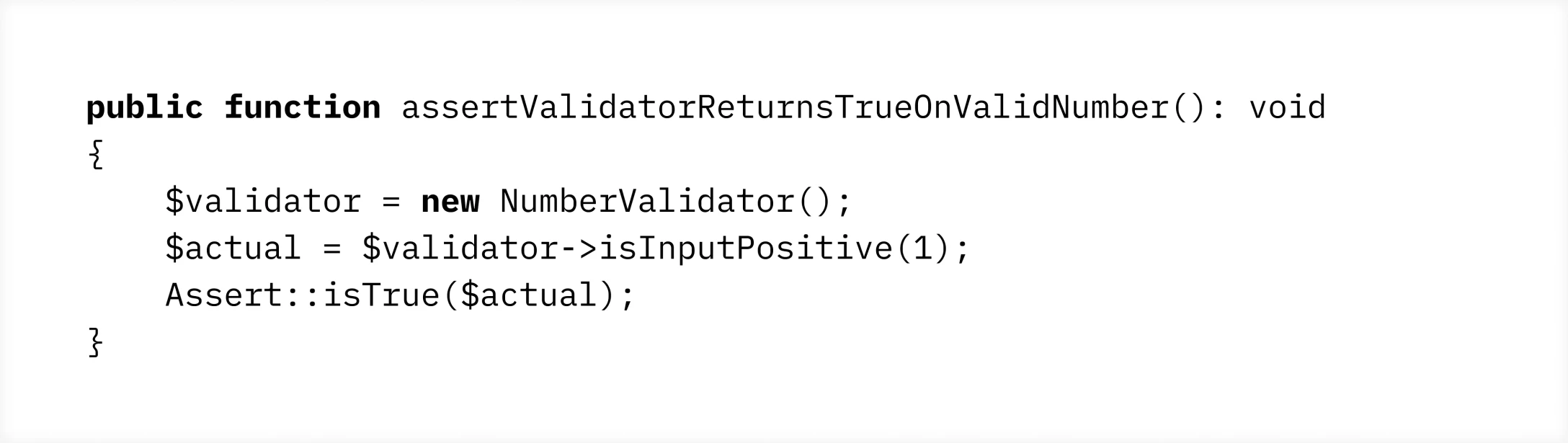
The first step in this process is writing unit tests, which we do primarily in the Backend for the PHP code. The tests themselves are implemented using the phpUnit tool.
The idea is to write code that calls individual methods of the class you want to test and verifies that the correct result is always returned when the arguments are set appropriately.
Here’s a small example test for a simple validator:
Here are a few ideas for unit tests:
Of course, there are exceptions to these principles; for example, years ago our team had a test that tested exactly one protected method in a class, since that method was the core of the class and all public methods simply called this protected method. This allowed us to save on testing effort. You can also overuse mocks, for example, to the point where you’re no longer testing real code but only the mocks themselves. These are pitfalls that you must constantly check for and that become relevant anew with every test.
With unit tests, we now know that the individual pieces of our code work correctly; now we need to verify that they are also assembled correctly.
In the unit tests, only a single section of code is called. We now want to verify that the code sections function correctly within the application logic, together with the Backend framework being used (in our case, TYPO3 Extbase). To this end, we write functional tests according to the relevant TYPO3 documentation.
By running the tests within a TYPO3 context, we ensure that the “surrounding environment” is initialized correctly. We can then write tests that, for example, access a (partially generated) database—in our case, we’re testing an importer.
We prepare a CSV file, call the import method within the test, and can then verify in the database that the rows match exactly what we expect—once again, we see AAA (Arrange, Act, Assert). Importers are just one example here; theoretically, you can also call scheduler tasks, controller actions, middleware, and other components.
One area that our team hasn't yet implemented specifically, but plans to address in the future, is tracking code coverage. In PHPUnit, you can configure which source code files are theoretically part of the test environment, and PHPUnit then tracks which methods, lines of code, and similar elements within the tests are actually called for those files.
From this, you can generate a list showing, for example, whether you’ve developed paths within a complex method that haven’t been tested, or whether there are any untested classes. Additionally, statistics are generated that indicate, as a percentage, how much of the code has actually been tested.
In the first article, we looked at code quality; in this part, we'll focus on the functions within the PHP classes. In the next part of our series, we'll look at how to test parts of our actual application.
Whether you’re an agency, an industrial company, or an independent development team: If you want to establish or further develop agile testing processes, we’ll support you with our expertise—whether through hands-on workshops or direct, project-based collaboration. We’ll guide you through every step—from introducing agile testing methods and optimizing existing processes to developing and implementing customized testing strategies. Feel free to reach out to us so we can work together to take your quality assurance and development processes to the next level!