Cancel
Start searching

This search is based on elasticsearch and can look through several thousand pages in miliseconds.
Learn more
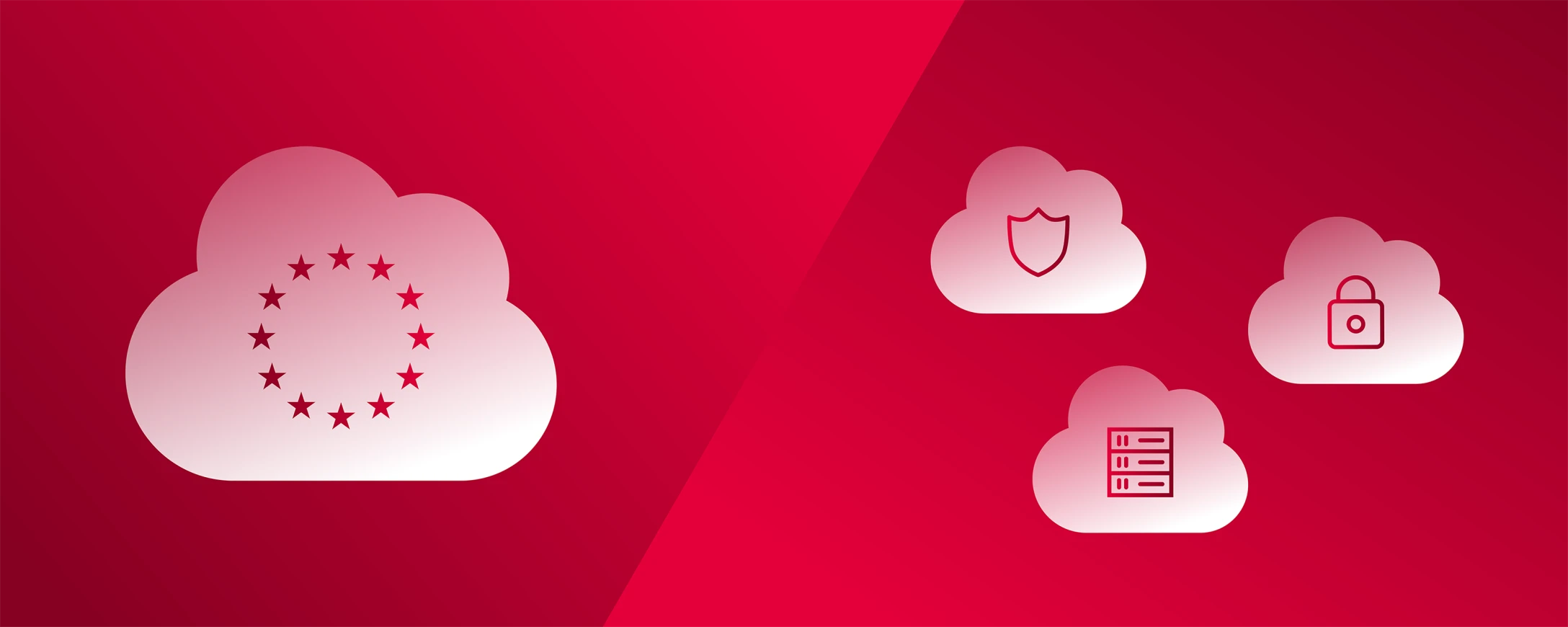
In my article “Why Infrastructure Is a Matter of Attitude” , I described why I consider European infrastructure solutions to be relevant. This post is about the next step: European options are not just a rational choice, but in many cases genuine alternatives —and, depending on the requirements, they can be considered without ideological blinders.
The question “Cloud or on-premises?” has changed significantly since the mid-2010s. Virtualization has become easier, hardware more stable, and the lines between cloud and on-premises are increasingly blurred.
We see this as well with our proServer product: It’s increasingly common even in small HA setups starting at just €150 per month.
And from a purely pragmatic perspective: Over the past 12 months, systems have been affected more often in practice because upstream services (e.g., CDN/WAF) went down than because “a server simply went down.” High availability is important—but it isn’t achieved solely by “more cloud,” but rather through architectural decisions.
Nevertheless, there are good reasons to use the cloud:
So once I’ve decided that part of my IT should move to the cloud, the next question is: What options are available—including in Europe?
"Cloud" is the umbrella term for the provision of IT resources (servers, storage, applications) via the Internet. It can be public (public cloud), private (private cloud), or hybrid—and is offered by providers of all sizes.
Depending on security requirements,a private cloud can also be implemented as an air-gapped cloud (physically and logically isolated, without a direct Internet connection), for example, for defense, financial, or healthcare applications.
Hyperscalers are a special category of cloud providers with global infrastructure, extreme economies of scale, and a broad, often proprietary service portfolio (e.g., AWS, Microsoft Azure, Google Cloud).
Scalability: flexible , but limited
Infrastructure: leased or self-operated
Ecosystem: depends on the provider
Providers: many (small to large)
Scaling: global , very fast, “seamless”
Infrastructure: highly optimized, often proprietary hardware/software
Ecosystem: very broad (from IAM to AI/serverless)
Providers: a few global players
Why this matters: For many SMEs, a “traditional” cloud is perfectly sufficient. Hyperscalers really come into their own when global reach, extreme scalability, or highly integrated platform services are truly needed.
There are many good alternatives in the European cloud market: for example, Hetzner (often our go-to choice for infrastructure), Mittwald and other providers. These are stable, practical solutions that we ourselves are happy to use.
However, when it comes to “true hyperscale” (in the sense of a very broad platform ecosystem and global scalability), the selection becomes more limited.
A very European approach was (and is) Gaia-X. The project is not a traditional cloud provider, but rather a federated model: many providers, shared principles and standards (identity, compliance, transparency, data sovereignty), so that the ecosystem feels more consistent for users. Gaia-X focuses on interoperability rather than siloed solutions and on verifiable rules and certifications rather than “trust me” —less structural lock-in, more control.
Things are picking up again: The first operational data rooms are scheduled to go live in 2026, for example, in the aviation, aerospace, and healthcare sectors. International partners (Japan, Canada) are also showing interest. Gaia-X is therefore not a “dead” project, but is continuing to evolve—even if implementation is complex and takes time.
In addition to the federated approach, there are also providers that are growing significantly toward “hyperscale”—with a focus on the GDPR, data sovereignty, and predictable operating models.
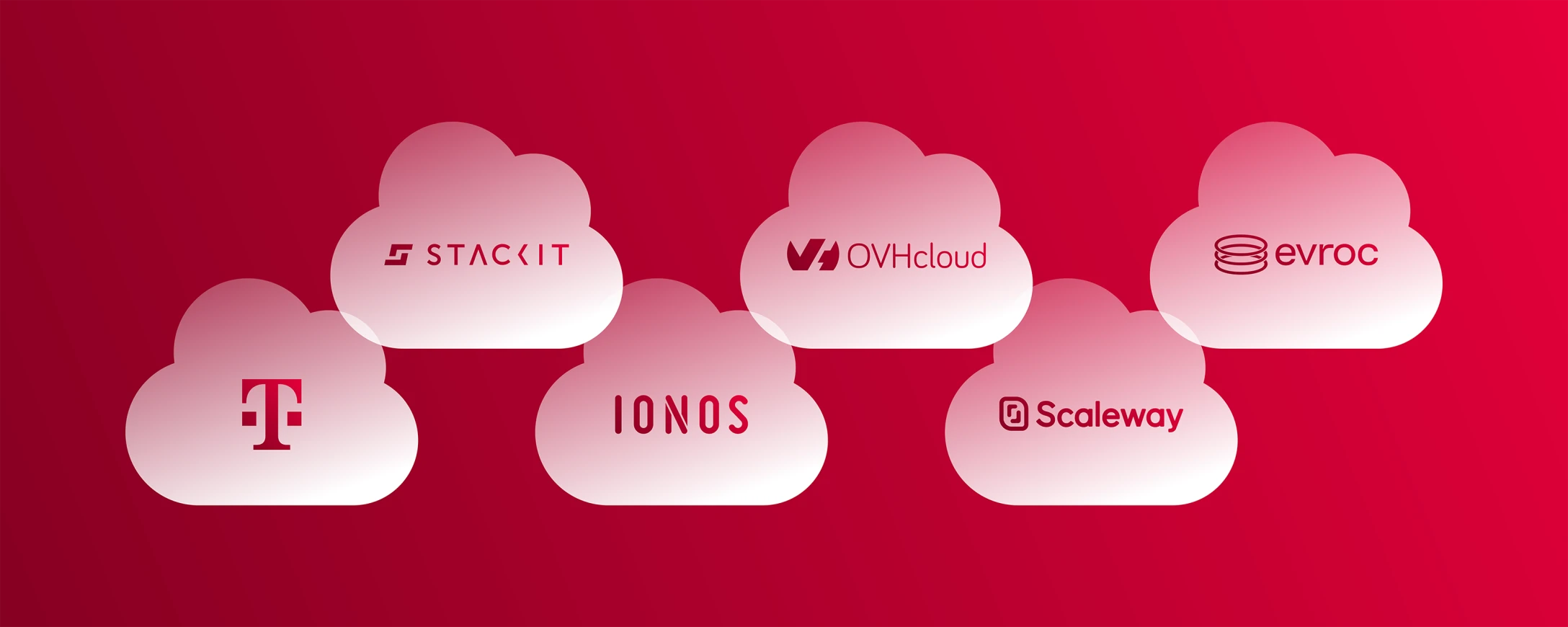
Deutsche Telekom (T Cloud Public)
Deutsche Telekom positions its T Cloud Public as a European alternative to U.S. hyperscalers, particularly for regulated industries and the public sector. Key selling points include data location, regulatory oversight, and contract terms aligned with European standards. The platform is based on OpenStack and, according to Telekom, is expected to significantly narrow the gap with U.S. providers in key core features by the end of 2026. Regarding sovereignty and location issues, it should be noted that statements may vary depending on the specific offering within the broader T-Cloud portfolio.
STACKIT (Schwarz Group)
STACKIT is increasingly emerging as a sovereign European cloud alternative with a clear focus on data protection and regulatory requirements. The platform operates its own data centers in Germany and Austria and meets requirements such as BSI C5, ISAE 3000 (SOC 2), and ISAE 3402, among others. At the same time, the infrastructure is undergoing massive expansion, including a new large-scale data center in Lübbenau, which is scheduled to be completed by 2027. Compared to AWS, Azure, and GCP, there remains a significant gap in terms of global reach and platform breadth.
IONOS
IONOS is an established European provider of hosting and cloud solutions that is particularly attractive to small and medium-sized businesses. The company emphasizes transparent pricing structures and European data protection standards. IONOS is also involved in initiatives promoting digital sovereignty in Europe, including Gaia-X.
OVHcloud
OVHcloud is one of Europe’s largest cloud providers and offers a broad portfolio ranging from public cloud and hosted private cloud to bare-metal and dedicated servers. The company consistently pursues an “EU-first” approach, focusing on data sovereignty, open standards such as OpenStack, and proprietary technologies for cooling and energy efficiency. OVHcloud operates several dozen data centers worldwide.
Scaleway
Scaleway is strongly geared toward development teams and offers a pragmatic entry point into cloud infrastructure without an immediate tie to U.S. hyperscaler ecosystems. Its portfolio includes, among other things, ARM-based instances, serverless offerings, and managed Kubernetes. The services are delivered from European regions such as Paris, Amsterdam, and Warsaw.
evroc
evroc is a relatively new European cloud provider focused on sustainability and digital sovereignty. Its first cloud and AI services have been available since 2025. Due to its early stage of development, the scope of services, available regions, and service levels should be examined in detail depending on the use case.
For us, this means: We don’t want to be dogmatic. We want to make sound architectural decisions:
Anyone planning infrastructure today should be aware of their options. We actively engage with the market, keep our stance on sovereignty in mind—and remain flexible where it makes sense.