Cancel
Start searching

This search is based on elasticsearch and can look through several thousand pages in miliseconds.
Learn more
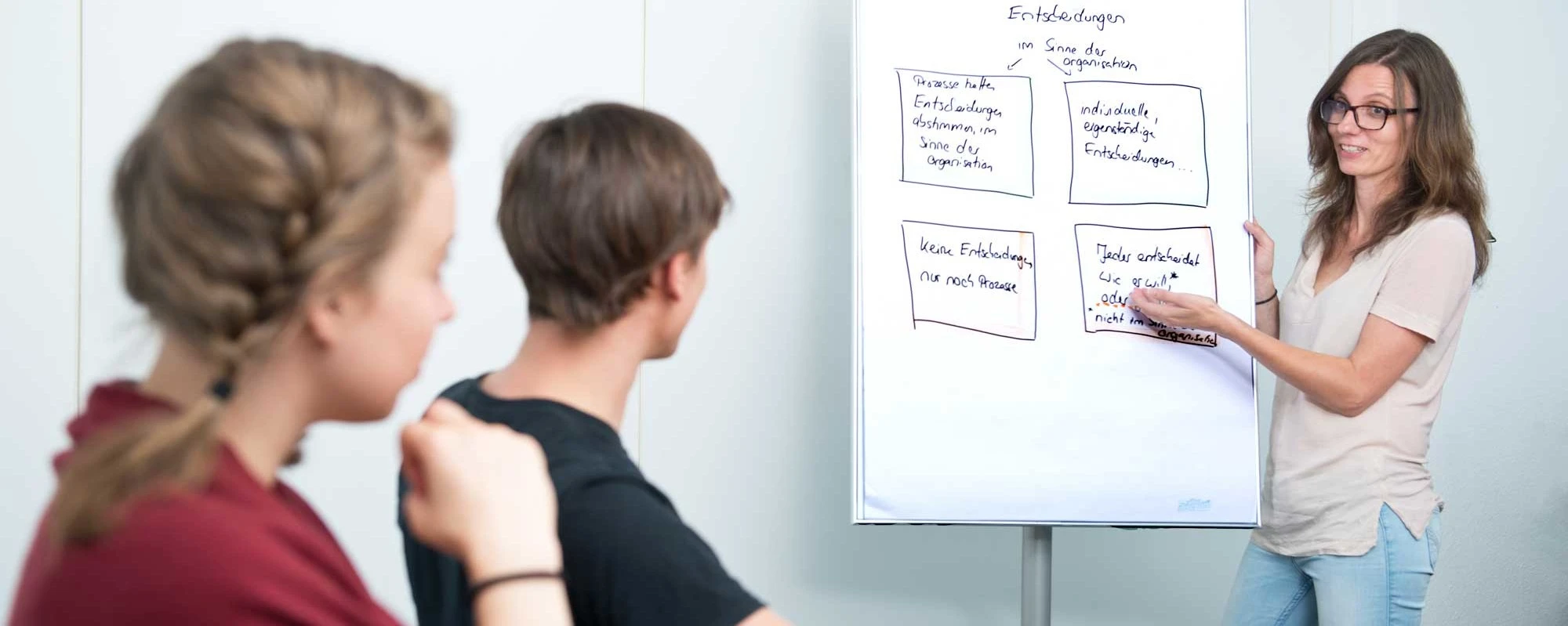
In an earlier post on “Reinventing,” my colleague already mentioned that we, as a company, are undergoing an organizational transformation. The vision we’re pursuing is to have self-organized teams. Because in self-organized teams, employees are given more decision-making authority and are, in fact, expected and able to make more decisions, there are good reasons to let them do so:
In the course of this, questions and concerns arose regarding the process by which decisions are formed and made at our company. Since, on the one hand, it felt as though everything was decided by Jürgen Egeling, the CEO, or as though there was no decision-making process at all, a process was introduced and is called: “Individual Decision with Consultation.”
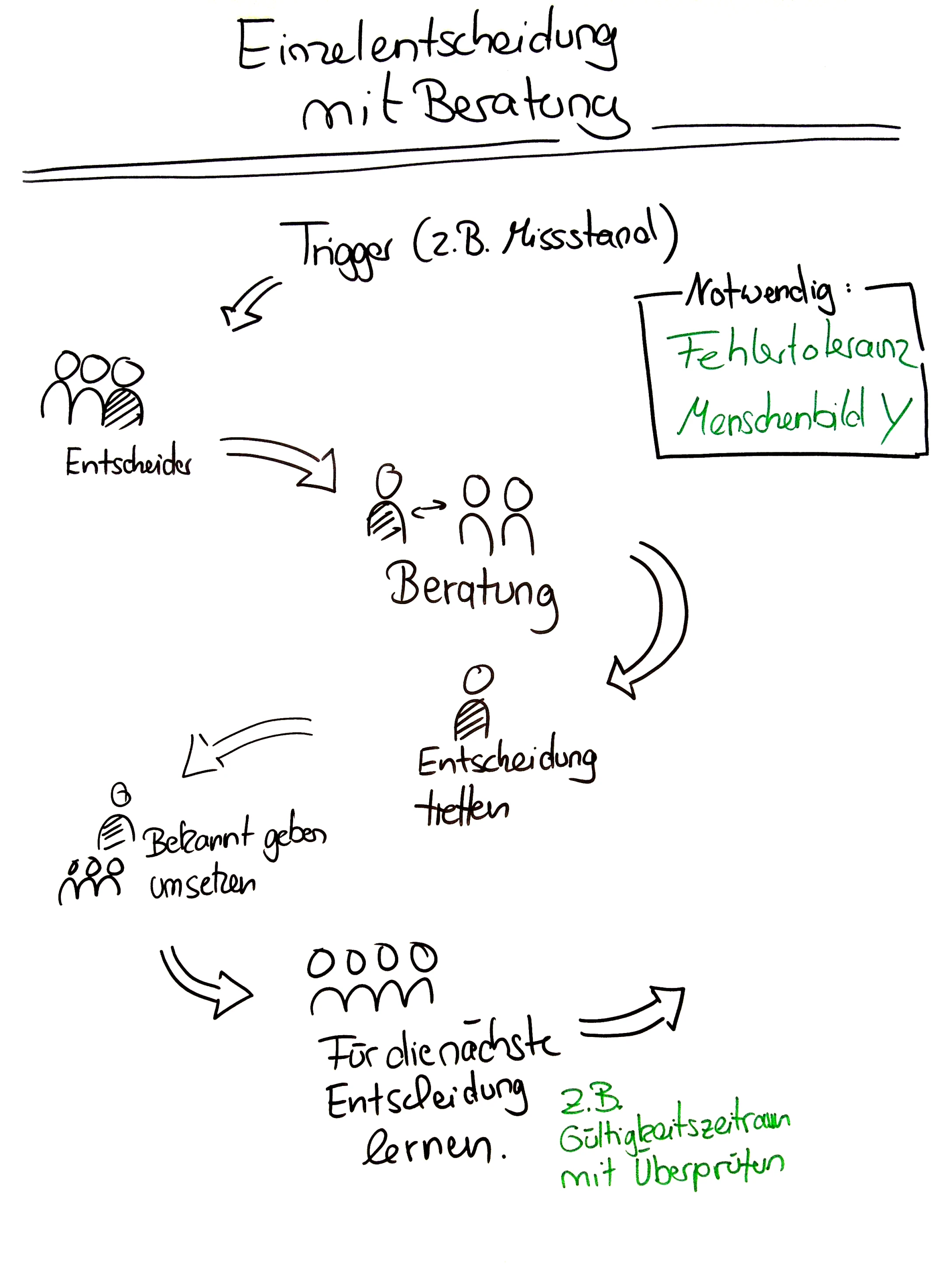
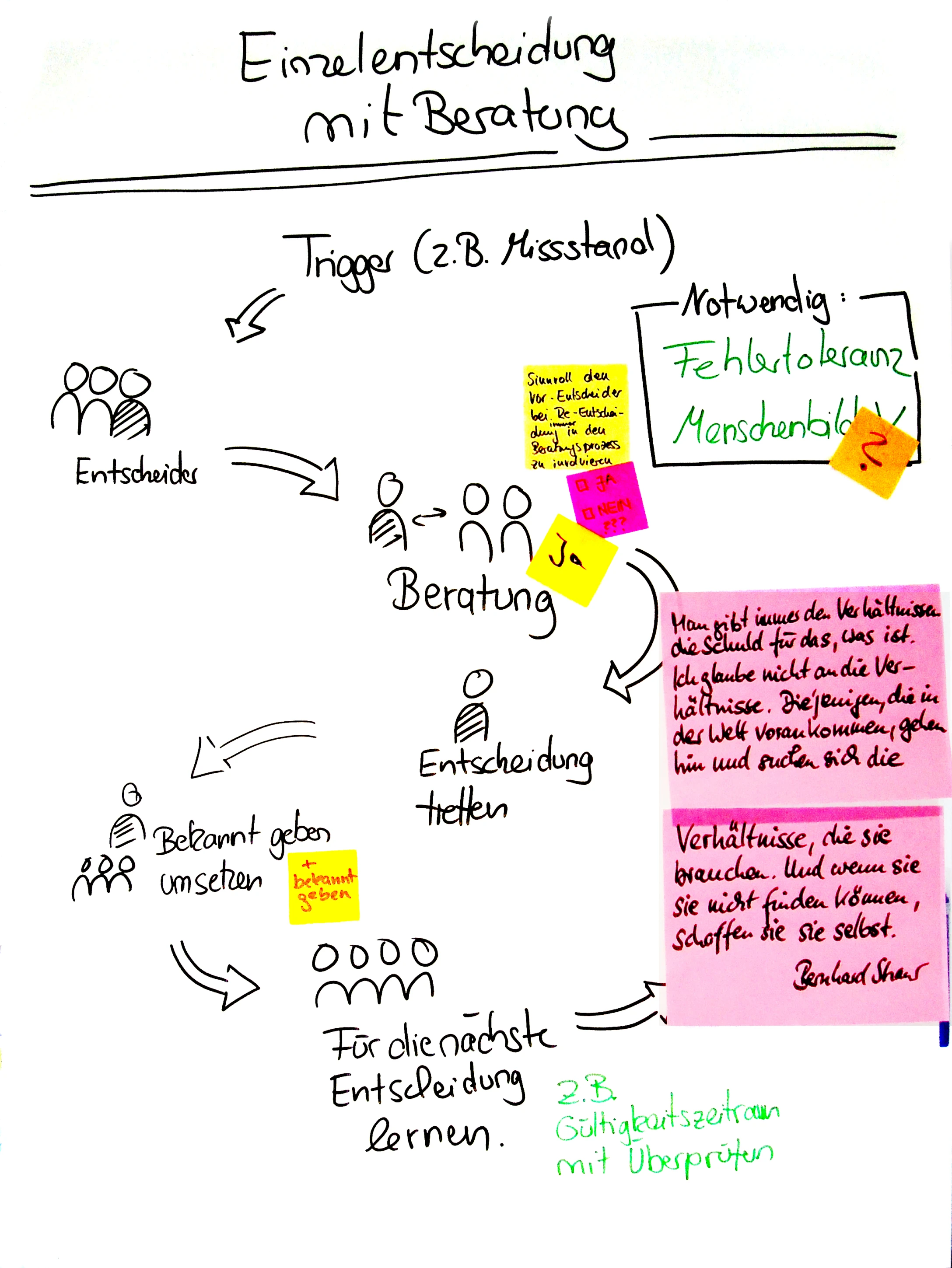
To ensure that teams make better and more frequent decisions overall, we have decided to introduce a consultative decision-making process. Flat hierarchies within the company allow anyone who wants to make a decision (for example, because they’ve identified a problem) to quickly bring in advisors to discuss the issue. However, it’s not mandatory for them to follow the advisors’ opinion—they can also make a decision that goes against it. So why do we do this at all? To get colleagues on board early on and uncover potential risks that we might not have considered ourselves. The decision reached is ultimately documented in Confluence for everyone to see. And so that people know who was involved in the decision (e.g., for follow-up questions) or what thoughts the participants have already shared on the topic, the decisions are recorded as shown in the following screenshot:
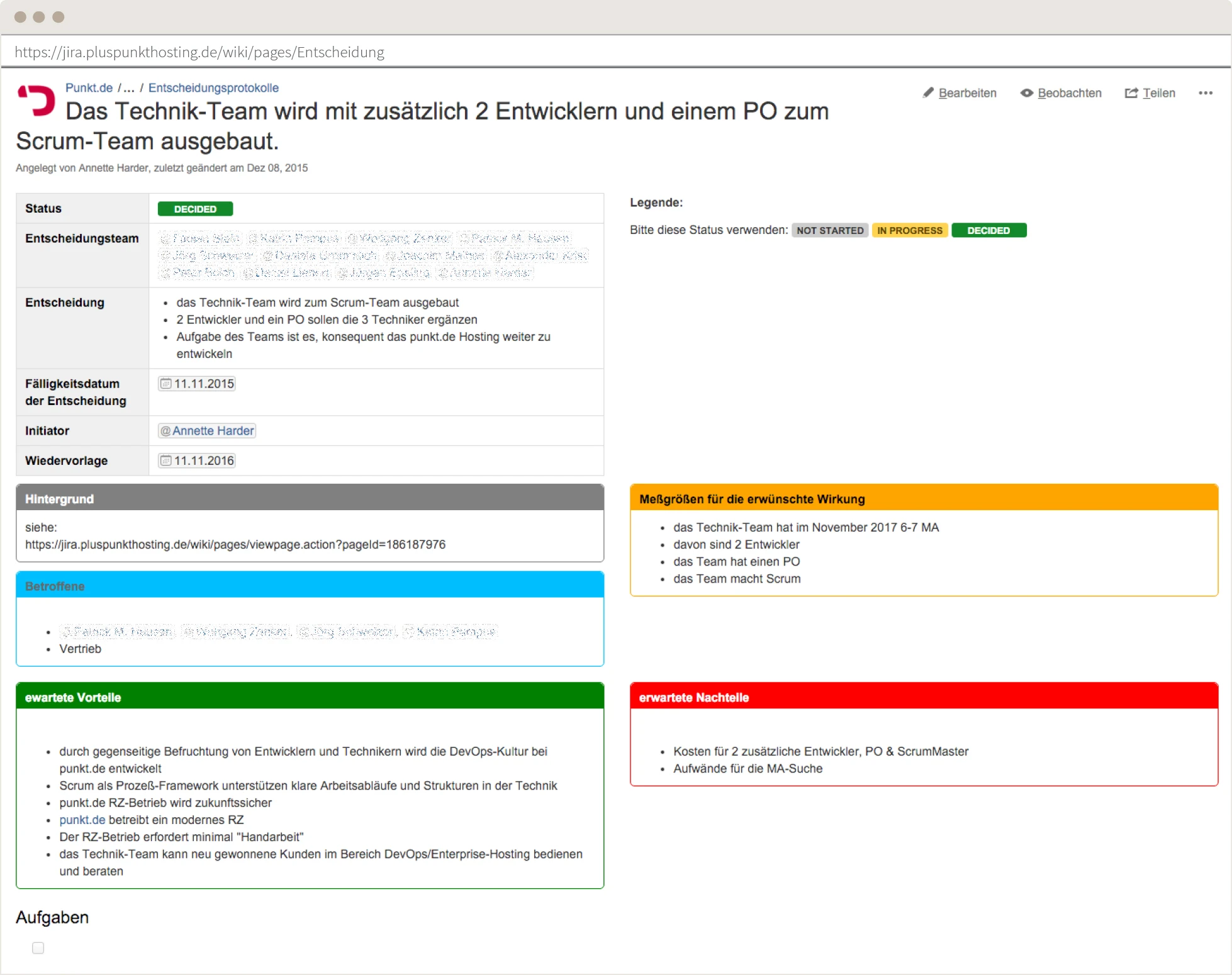
We’ve been following the defined decision-making process since October 2015, and we can say that it’s been working very well so far. In addition to smaller decisions aimed at improving the feedback culture within the company (such as introducing journals for self-reflection or encouraging employees to give more positive feedback), we’ve already made some very team-specific decisions. For example, teams can now decide for themselves whether to participate in conferences and trade shows. In addition, the first company-wide decisions are being made: These include the decision to expand our technical department (see screenshot) and to rebrand CCOM-Inet aspunkt.deHosting, accompanied by new hosting products.
Jürgen Egeling also demonstrated that we, the employees of punkt.de, are now being more closely involved in the business and the future of punkt.de by including us in the distribution of profits to employees. So instead of paying each employee an amount of
x euros, a decision-making team resolved that commitment to the company should be rewarded. The team therefore developed an evaluation scheme that allowed each employee to (anonymously) rate their colleagues’ commitment. The evaluation scheme also ensured that no one went away empty-handed and that the results could be used to determine the bonus. Thank you, dear decision-making team, and thank you, punkt.de!