Cancel
Start searching

This search is based on elasticsearch and can look through several thousand pages in miliseconds.
Learn more
25 years of OOP and 15 years of the Agile Manifesto—if those aren’t good reasons to celebrate! So on Tuesday, after the “ultimate IT get-together,” the organizers invited everyone to a party. But it was more of a letdown than a wild celebration. Unlike the conference itself!
There were two presentations that dealt in depth with the nature of decision-making in systems and organizations, respectively. Since we atpunkt.dealso introduced a new decision-making process some time ago, I was very interested in what I would learn here.
Uwe Lübbermann presented Premium’s partnership-based model of collaboration. This model includes not only the employees themselves but also, to the greatest extent possible, all business partners. Decisions at Premium are made by consensus, which means that everyone affected by a decision must agree to it. Uwe Lübbermann explained that during the initial phase, it can take a long time to reach a decision, but he noted that this tends to resolve itself over time once the decision-making process has become established.
Making decisions by consensus is similar. All those affected are involved in the decision-making process, but a decision is adopted simply if there is no veto against it. Sociocracy 3.0, or S3 for short, operates on this decision-making principle. Since some things only become clear once they’ve been tried out, a decision isn’t fixed for a set period but can be revisited at any time—specifically, as soon as it becomes apparent that those affected by the decision have encountered new objections.
Whenever decision-making is involved, the topic of self-organization also comes into play. Andrea Proviglioni led a highly recommended full-day workshop on the role of leaders in self-organized teams and organizations. Through exercises in which participants had to come together in ever-changing groupings, various aspects of leadership were explored. Among other things, this served to promote diversity—with the goal of opening up the broadest possible space for information and solutions.
These experiences were reinforced and consolidated by Andrea Proviglioni’s in-depth theoretical knowledge and wealth of personal experience. And, of course, the aspect of diversity is just one of many that plays a role in leading self-organization.
Microservices are currently the subject of much discussion, and in some cases, very controversial debate. Another ongoing topic is the CD pipeline, which in many cases requires us to bring the “Ops” team on board as early as the development process—which brings us to the topic of “DevOps,” and thus also to “cross-functional teams”: yet another organizational topic!
The topics of testing and requirements engineering can also be placed within the context of cross-functional teams: the more successfully we can involve testers early in the development process—or involve developers in the requirements engineering process—the faster we can achieve results that can be put into production.
In his keynote, Frank Simon from the German Testing Board advocated for a modern understanding of testing. The tester who comes in from around the corner and just breaks everything is a thing of the past! Ultimately, there’s no alternative: If you want to be fast and react flexibly, you have no choice but to continuously maintain the quality of your software through consistent, automated testing—all the way through to production.
Requirements Engineering had its own track—but for me, one of the other topics was always more interesting, which is why I didn’t attend any sessions on this subject.
..., who gave a keynote on the software industry’s social responsibility, was, in my opinion, correct in substance with this message, BUT I felt the presentation came across as unprepared, full of repetitions, and featuring improvisation that only worked halfway. Personally, I could have done without it!
He canceled his participation in the “ultimate IT roundtable”—a tradition at OOP—at the last minute, according to the organizers, “because he had to appear on Markus Lanz’s show.”
Unfortunately, however, quite a few of the other keynote speeches had the feel of a promotional event.
OOP is great—it’s simply an institution where you can really gauge how close you are to the pulse of IT—or where you might need to “brush up” if you want to stay on top of things.
And: You don’t have to be a software architect to find plenty of great inspiration there! That said, you don’t necessarily have to attend every year.
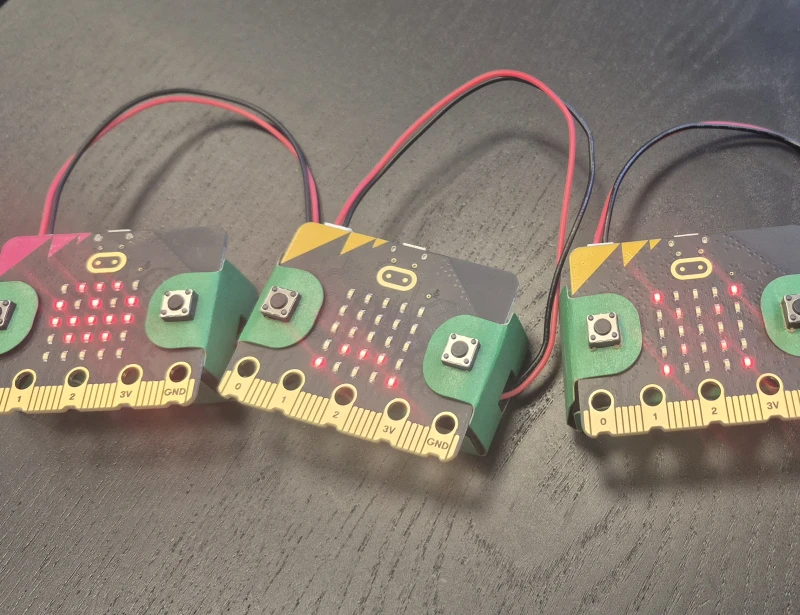
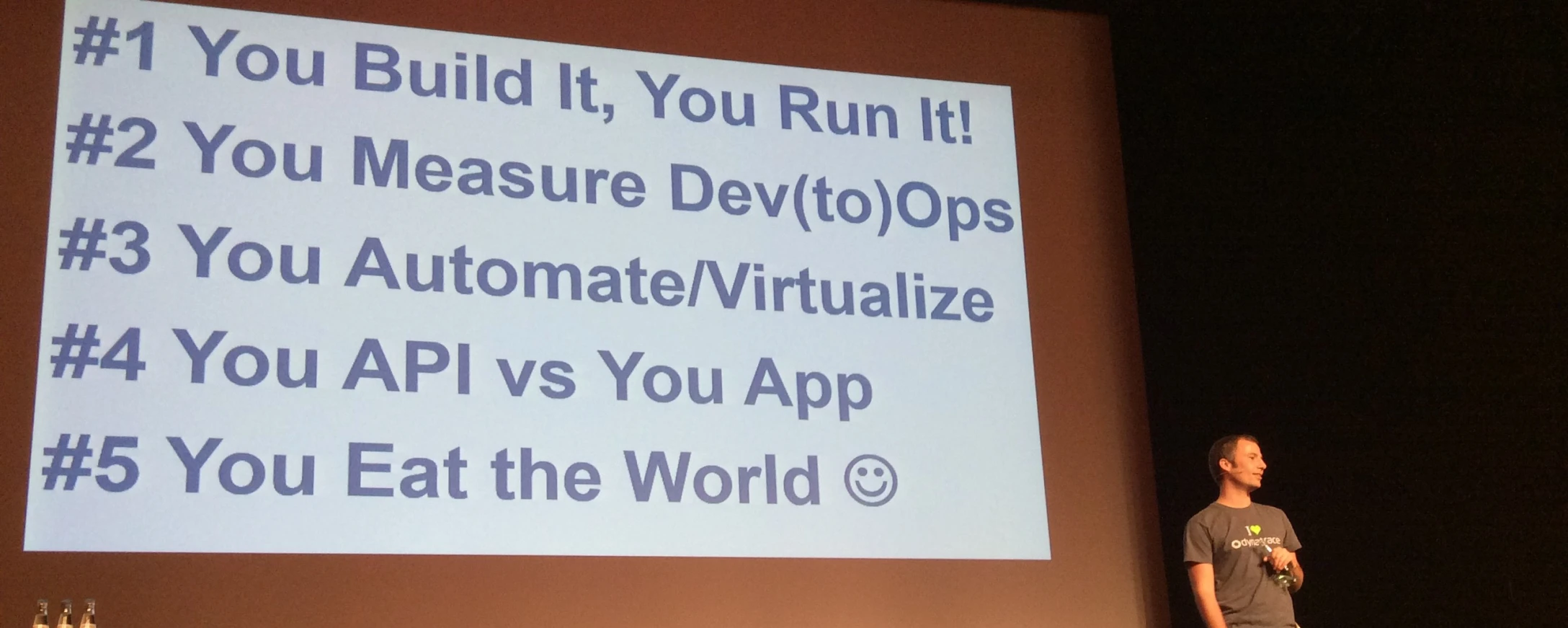
To wrap things up, here are a few impressions from the conference: