Cancel
Start searching

This search is based on elasticsearch and can look through several thousand pages in miliseconds.
Learn more

For quite some time now, articles about women in software development have been appearing regularly. The topics range from interviews about women’s career paths and descriptions of their day-to-day work to articles on sociological studies that explain why girls so rarely enter technical professions. Sometimes there are initiatives, such as workshops or degree programs, aimed at getting women excited about IT.
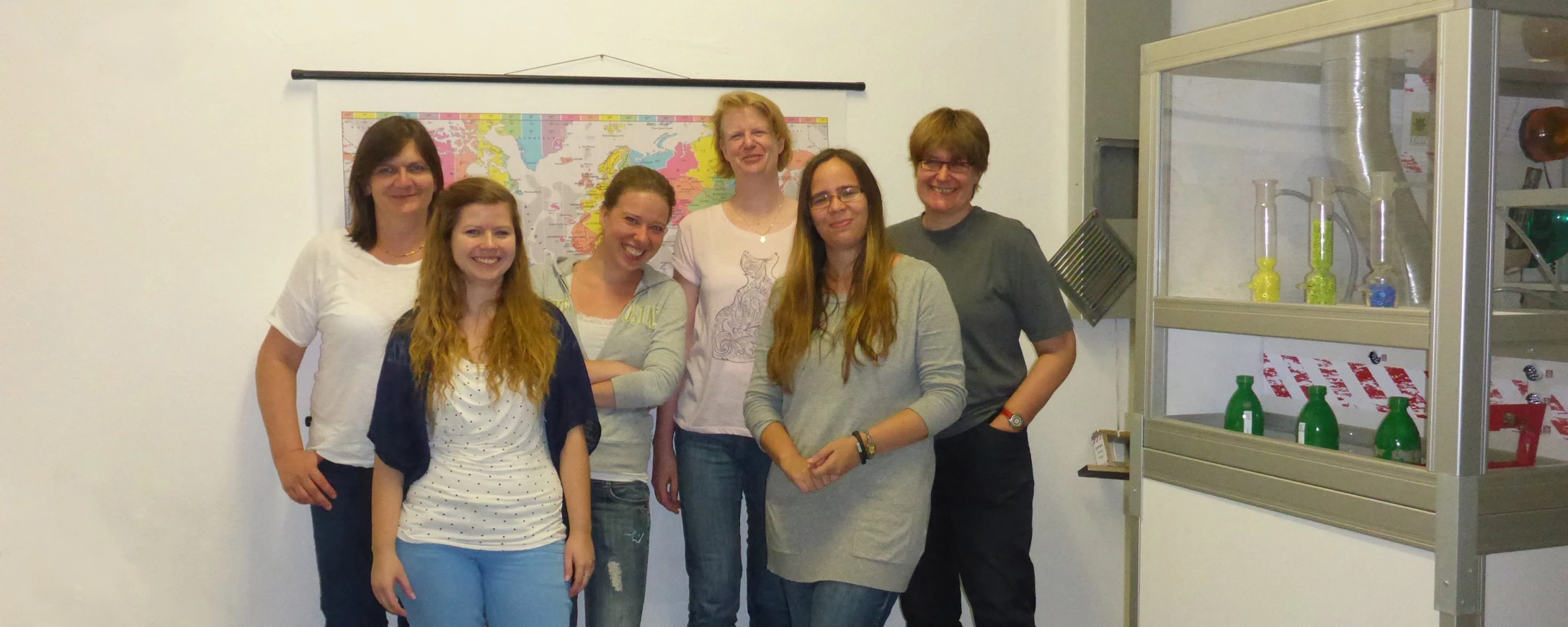
We took this as an opportunity to examine the topic and provide a brief glimpse into our company. After all, nearly one-third of our workforce is female. We want everyone to know this—and we want it to stay that way.
After reading a few articles, we learned that the world’s first programmers were women and that, in the U.S., software development was originally considered a women’s profession (1). Nevertheless, today’s statistics show exactly the opposite:
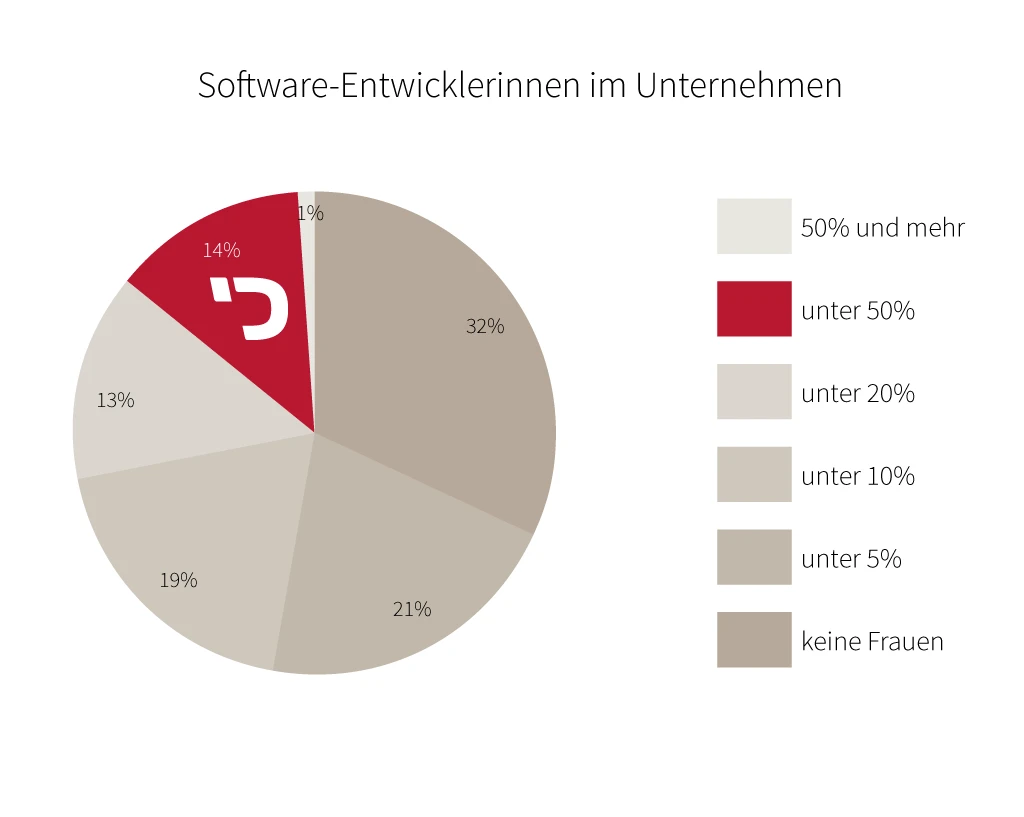
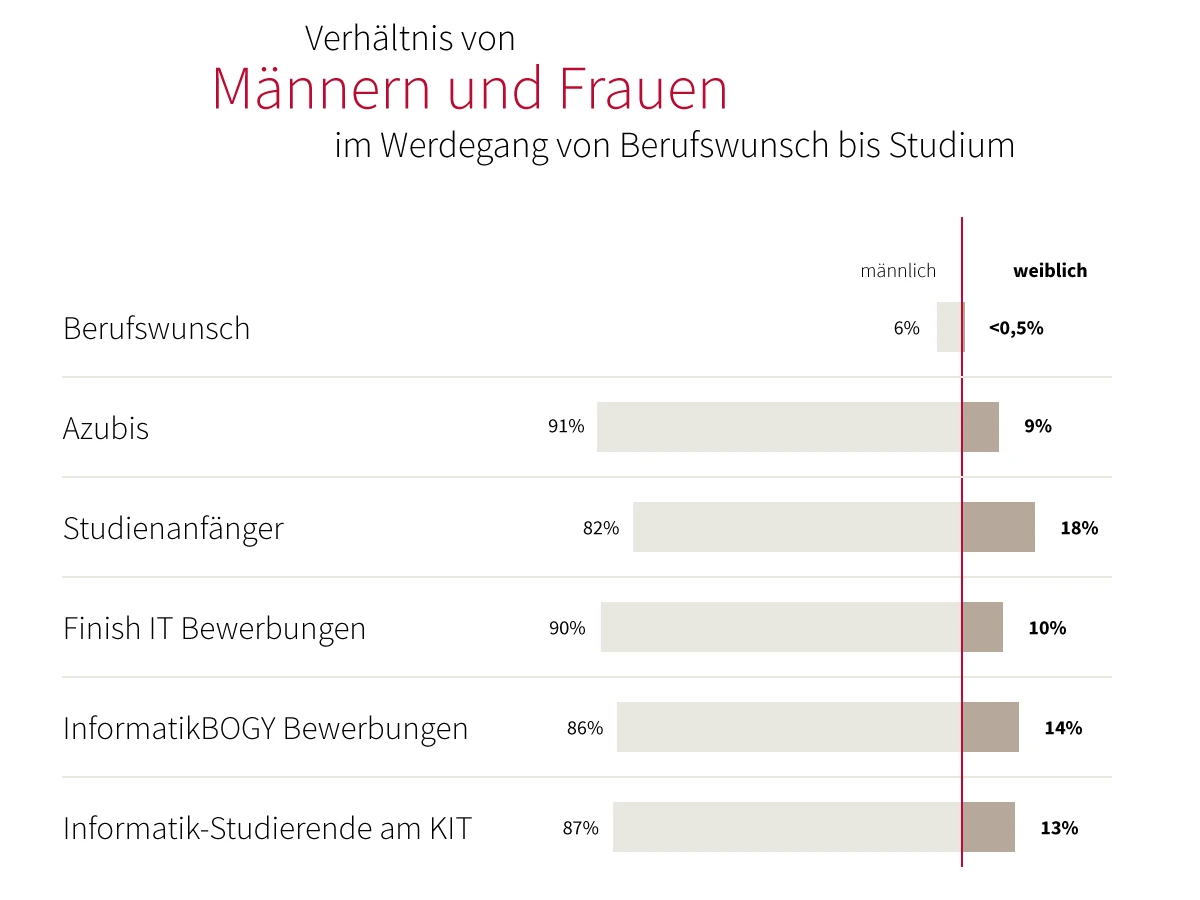
On average, only 9 percent of women begin an apprenticeship in IT, while at least 18 percent of women enroll in a college program (2). According to Bitkom, approximately 15 percent of IT employees were women in 2015 (3). In contrast, the proportion of women at punkt.de is significantly higher. Company-wide, the figure is 28 percent. The proportion of women working in software development currently stands at 25 percent (March 2018). We’re proud of this and welcome every application from a woman, because that’s still far too rare today. Mr. Jonas Bart, the contact person for HR & Recruiting at CyberForum, can confirm this. He oversees the “Finish IT 2.0” program for college dropouts there. Since the project began in January 2015, only 11 percent of applicants have been women. The situation is similar with the Karlsruhe-based “InformatikBOGY” program. In recent years, between 14 and 22 percent of applicants have been women.
Mixed-gender teams work better! This isn’t just a theoretical concept supported by studies and books on industrial psychology. No, our female and male colleagues say so, too.
For example, an article by Business Ladies describes how, when it comes to development, women sometimes take a very pragmatic approach. They prefer to make things simpler rather than more complicated, and above all, they don’t develop just for the sake of technology—they strive for solutions that work in everyday life. Nevertheless, they also want to consider new perspectives and thereby keep the spirit of innovation alive. (4)
According to a Developer Week survey, one-third of respondents feel that having a larger proportion of women on a team leads to improved team harmony. In addition, nearly the same proportion of respondents expects this to result in more innovation and more intuitive user interfaces (5). Our colleagues also confirm these points, noting that collaboration is more productive when women are part of the team. Furthermore, this creates a more pleasant work environment and fosters a more solution-oriented approach to work. Jörg, one of our colleagues from the technical department, says: “Mixed-gender groups work better because, for example, there are no power struggles.” “And because women view things differently—which is very important in our work—this leads to more individualized solutions that help us achieve our goals,” adds our colleague Ursula.
A third source describes what many of our male and female colleagues alike emphasize: “To be taken seriously by men, you have to argue objectively and always conduct yourself professionally” (6). “What helps us women at punkt.de is the fact that there are already women working here who fulfill customer requests with expertise, dedication, and a focus on results. This has a positive impact on new female colleagues and makes things a little easier for them,” says Christiane. Although women at punkt.de also have to hold their own—just like in any other job—they do not face skepticism from their male colleagues.
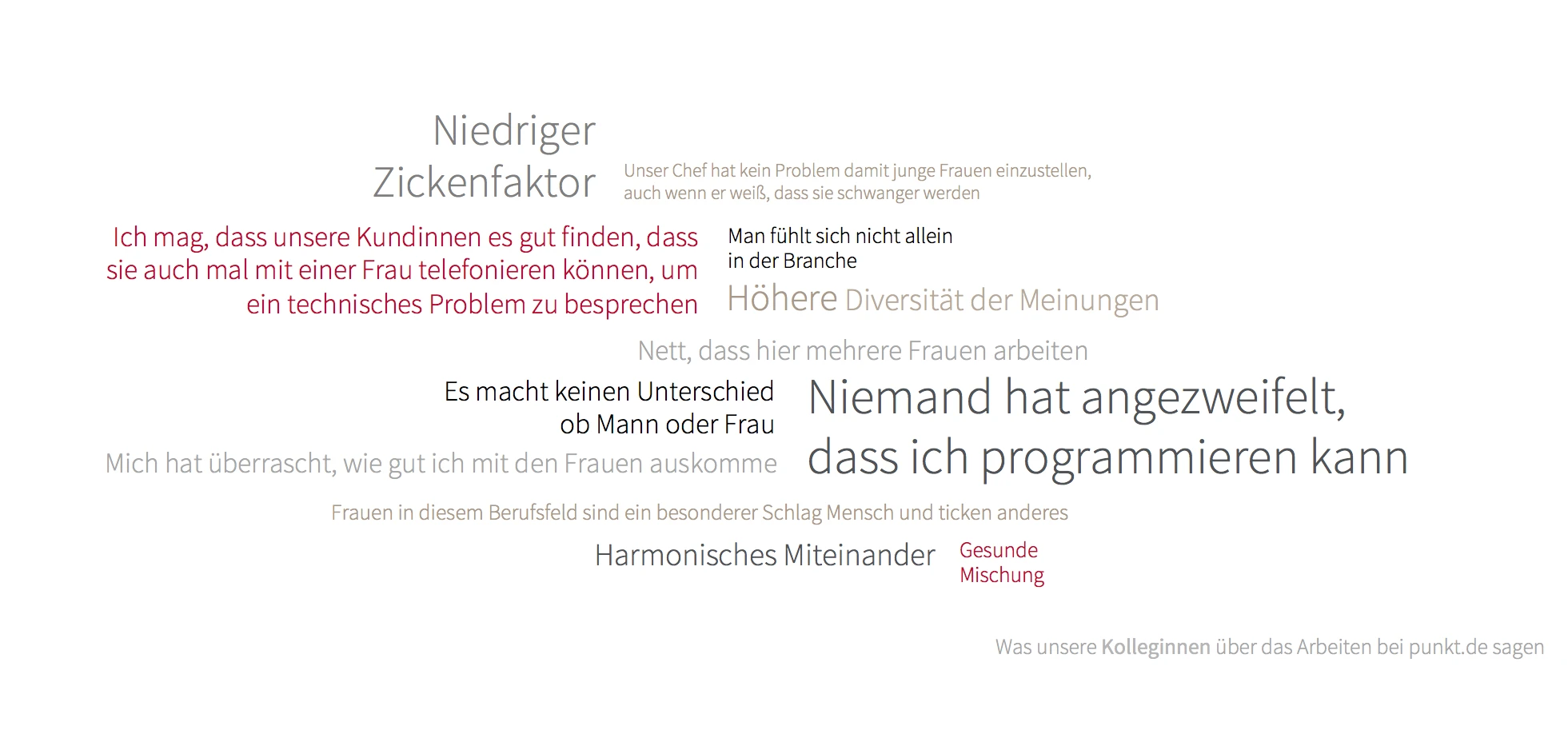
Thanks to interviews with our female colleagues, we’ve also learned that, as a company, our women give us an advantage when it comes to customer interactions. Not so they can serve as “showpieces” at meetings, but so they can act as expert points of contact for our female customers and engage with them on an equal footing. After all, our work with customers has consistently shown that women respond to requests differently, communicate differently, and are more likely to strive for harmonious collaboration.
The range of career paths in IT is quite broad, even though there are only a few IT apprenticeships. Specialization usually doesn’t occur until later in one’s career. Our female developers basically all do the same thing, yet they have very different areas of focus:
We’re especially proud that our women are helping drive the company forward by, for example, introducing new technologies and methods. Christiane, for instance, introduced layout testing to the company. This allows us to identify errors in the layout of our clients’ projects more quickly when numerous changes are made to the code. And thanks to Daniela (a former colleague), we’ve also managed to bring our two business areas—development and hosting—closer together, and we’re now exploring DevOps and automation more intensively.
In addition to the areas of focus mentioned above—which are common in a web agency like ours—there are many other directions in which one can develop a career in IT. These range from sales to roles more closely tied to hardware, such as an operator or systems integrator, to the role of a product owner. In recent years, roles such as user experience specialist, cybersecurity expert, big data analyst, and more consulting-focused positions have also become increasingly common. And there are certainly many more.
Despite this great diversity, as the statistics clearly show, the proportion of women in all IT jobs tends to be rather low. Even the “InformatikBOGY” program has not seen an increase in the number of female applicants, which Tatiana Rhode, project manager of InformatikBOGY at KIT, deeply regrets.
The InformatikBOGY is a nationwide initiative by KIT in Karlsruhe that combines the mandatory internship program at high schools (BOGY—Career Orientation at High Schools) with a focus on computer science. The goal is to dispel stereotypes about computer scientists at an early stage. And the students gain insights into both research and everyday life in the industry. InformatikBOGY is carried out in collaboration with partner companies such as punkt.de.
We hope that more girls will believe in their abilities and dare to get a taste of IT careers even before graduating from high school. After all, later on, as computer science students, they are even more consistent than their male counterparts and are more likely to successfully complete their degrees.
According to a 2014 Allensbach study, medical, social, and artistic professions remain among the most popular career choices for girls. Many girls don’t even have technical or computer science-related careers on their radar (7). And even here, some women work in the field only because they happened to come into contact with computer science—either shortly before or after starting college. This is where we need to start if we want to address the shortage of skilled workers in IT. According to IT expert Diana Knodel, girls are very enthusiastic about programming once they’re exposed to it (10). But that exposure has to happen first!
According to experts, there are many reasons why girls come into contact with computer science less often than boys. For young girls, for example, the stereotype of the “nerd” sitting alone in the basement programming while surrounded by pizza boxes is not very appealing. The ingrained prejudice that boys are more interested in technology also persists. And the fear of having to deal with very inflexible work schedules contributes to the fact that girls and women are less likely to pursue careers in IT professions. Added to this is the low proportion of women in these very fields of study and professions. None of this is very motivating for many girls.
It’s not just companies that can play a positive role in encouraging women to take an interest in IT jobs (at an earlier stage), since there’s generally no lack of skill. Each and every one of us can do our part. The Allensbach study mentioned earlier showed that friends and acquaintances are the number one source of information when it comes to career choices. Mothers rank second, followed by the internet as a research source. (7)
This means that....
...women in IT should share more about their experiences, especially with their friends and acquaintances. This motivates young girls because it shows them that women are very much suited for this industry. Furthermore, the Allensbach study showed that conversations with people who have experience in the profession they’re interested in are the most helpful source when seeking information about a job. Since there is also a lack of female role models, this is likely a good—albeit laborious—approach, as it cannot reach many girls at the same time. (7, 10)
... Schools have a major influence on future career choices. Since studies show that boys have greater confidence in their own abilities than girls, schools can help girls develop a more positive attitude toward these career fields by specifically fostering their technical skills. This means that we need to get them excited about subjects like math and physics and spark their curiosity. One way to do this is by addressing real-world problems in the classroom, thereby imparting more practical knowledge. (9, 11)
... the media can also play a role here. For example, instead of confining women to stereotypical roles, the media could produce a series about successful female computer scientists, publish articles in daily newspapers, or increase coverage of successful women in IT on social media channels. (9)
... parents, too—or perhaps especially parents—can play their part through their parenting. Here, we can only offer the advice to try to step outside typical male/female roles and maintain ongoing exposure to technology—or at the very least, not withhold this exposure from girls. (11)
... universities could seek out more appealing names for their degree programs. This would greatly increase the appeal of these programs for women. However, no false promises should be made. On the contrary: the focus should be on those areas that are already being taught and are preferred by women—such as communication. In addition, combining these fields with professional areas that women are very interested in studying—such as medical informatics—makes sense. (10,11)
KIT, for example, offers various programs for girls (not exclusively in computer science, but in the STEM subjects) to give them a hands-on look at what these career fields might entail. Here is KIT’s complete program, though it’s only from last year.
Another good example is the “App Camps” platform, which provides teachers with resources they can use to introduce their students to programming (10). And a girls’ high school in Stuttgart, for example, has maintained a partnership with Bosch and the machine manufacturer Trumpf for years (9). In these projects, technical devices are built on-site at the partner companies to provide hands-on illustrations of topics covered in physics class.
One project initiated at the federal level is Girls’ Day, which not only gives women a taste of careers in IT but also covers the full range of technical professions. Such initiatives and similar ones can be found at http://www.komm-mach-mint.de/ and are among the many positive examples. Another project launched at the federal level is a computer science training program for educational specialists and teachers, who gain practical ideas for teaching children the importance of computer science as early as preschool or elementary school.
And finally, we have a few tips for all women working in IT: We gathered these for you from our colleagues during our interviews.
Dear women, don’t underestimate your abilities! Unfortunately, this is a tendency we tend to have, but as we mentioned at the beginning: Women were the pioneers in programming—follow in their footsteps!
We’re giving you this opportunity and look forward to receiving your applications.
Studies:
Networks:
(3) https://www.staufenbiel.de/magazin/joballtag/warum-die-it-branche-mehr-junge-frauen-braucht.html
(4) https://ikonista.de/bitte-nicht-pink-frauen-in-der-it/
(5) https://gruenderfreunde.de/2015/06/15/gege-fachkraeftemangel-frauen-in-die-it/
(6) http://compass.ptvgroup.com/2017/08/ptv-insights-frauen-in-der-it/
(7) https://www.vodafone-stiftung.de/schule-und-dann/
(8) https://www.computerwoche.de/a/die-neue-chance-fuer-frauen-in-it-berufen,3223555
(9) https://www.stuttgarter-zeitung.de/ideenwerk-bw
(11) http://www.sueddeutsche.de/bildung/mint-faecher-berufswunsch-informatikerin-na-klar-1.3623026-2