Cancel
Start searching

This search is based on elasticsearch and can look through several thousand pages in miliseconds.
Learn more
The abbreviation “FEGIME” stands for “Fédération Européenne des Grossistes Indépendants en matériel électrique” (European Federation of Independent Electrical Wholesalers). FEGIME Deutschland GmbH & Co. KG (FEGIME) comprises approximately 45 family-owned businesses in the electrical wholesale sector. FEGIME Deutschland has evolved over decades through mergers of medium-sized market associations. The shareholders generate approximately 2.4 billion euros (2023) in revenue in Germany and are represented at over 160 locations (details: https://www.fegime.de/ueber-uns/)
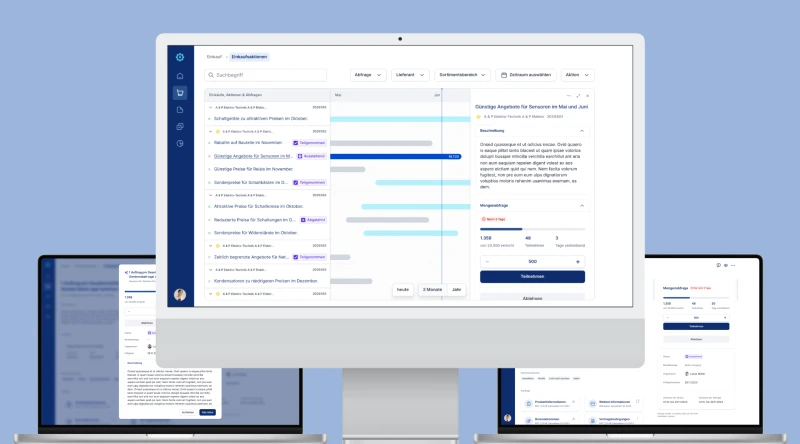
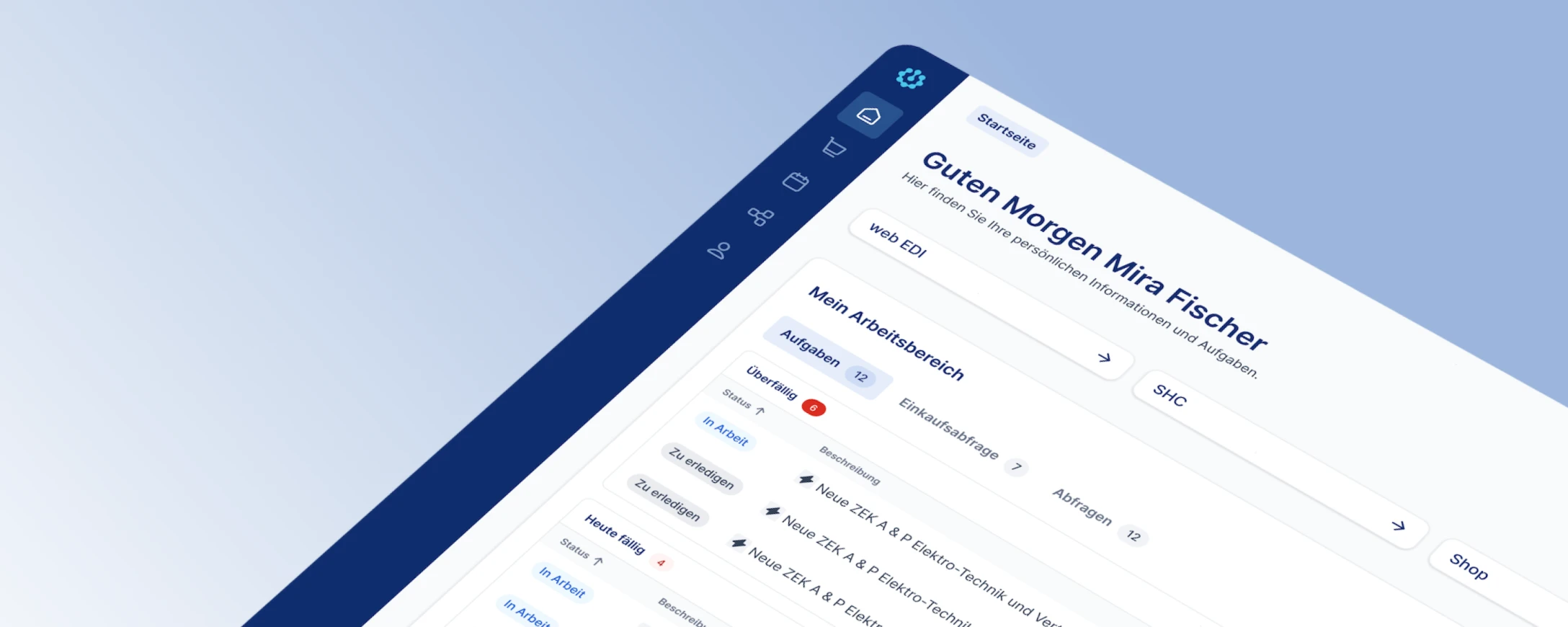
For FEGIME, as a market association, it is very important to centralize coordination and communication among its member companies in one place. To this end, it relied on a custom-developed extranet that had served it well for over 15 years. The extranet was operated and further developed internally; however, it was based on a monolithic architecture and, after such a long time, had reached its limits in many areas.
On the one hand, there were many issues with design, UI, UX, and performance; on the other hand, there were technical challenges in developing new features. Day-to-day use of the extranet was becoming increasingly difficult and cumbersome for both FEGIME and its subsidiaries. The operation and maintenance of the system were also becoming more and more challenging due to a generational shift within the internal IT department.
Our mission was to develop a new extranet that had to meet the following objectives:
Even during the first workshop for the new extranet, it quickly became clear that a great deal of fundamental conceptual work was needed before development could begin. The old extranet had grown over a period of 15 years. Complexity had to be stripped from the system without losing critical processes, while simultaneously implementing new features. Since the extranet contains sensitive and business-critical information for the shareholders, the issue of data sovereignty also had to be taken into account during the design phase.
In addition to this conceptual work, various interfaces—for example, to online stores and databases—had to be planned to manage the community’s four million items.
All of this, of course, had to be highly performant and designed to be attractive to users on both the FEGIME and company sides who use the extranet daily.
Furthermore, the new extranet was to be built on a modern core that could be easily expanded in the future and that met the strict requirements for a rigorous and robust permissions system. The accumulation of technical debt and vendor lock-in were to be avoided.
In summary, the requirements for the new extranet boil down to an application that must be secure, high-performing, flexible, and independent. Open-source solutions offer all these features (and more).
Security
The core of the application is TYPO3. As an open-source CMS with a large community, it has established itself over the past decades and provides an extremely effective and robust authorization system. It also serves as a data provider. A very active community monitors the CMS’s security and responds quickly to current threats.
Performance
By using TYPO3 as the core and a custom-developed React front end, we were able to optimize response times. For search, we rely on Solr with custom indexes, which has led to noticeable improvements for users when searching for information on the extranet and thus promotes acceptance of the new application.
Flexibility
During the design phase, workshops were held with the various departments (suppliers, purchasing, marketing, IT, etc.). This made it possible to address the specific requirements of each department individually and develop the corresponding features to fit their needs precisely. Combined with thorough documentation and open-source code, it is easy to further develop the application and maintain it in the future.
Independence
The issues of “data sovereignty” and “vendor lock-in” are more relevant than ever. In this project as well, it was important to FEGIME to retain control over its own data. Since sensitive and economically critical information is exchanged among shareholders via the extranet, both security and sovereignty must be guaranteed. But what does that mean?
This requirement applies to both the hosting of the application and the code itself. A major advantage of open-source solutions is that the code belongs not to the agency but to the client (in this case, FEGIME). The developed code is open and can be viewed and managed by the client’s IT department. Should the framework conditions for the application or the collaboration with the agency change in the future, the code and all data belong to the client. This is a key difference from proprietary software providers.
Our FEGIME project is a very good example of how open source helps small and medium-sized businesses modernize without becoming dependent on a single vendor. There’s no need to compromise on security, features, or application performance. Scaling the application is also straightforward.
With an open-source solution, both small and medium-sized businesses and large enterprises can retain control over their own data and have an application developed that is precisely tailored to their needs. And the whole thing is free of licensing costs.