Cancel
Start searching

This search is based on elasticsearch and can look through several thousand pages in miliseconds.
Learn more
E-commerce is changing rapidly. Today’s customers expect flexible, personalized experiences; new business models emerge almost overnight; and at the same time, platforms must remain stable and maintainable for years to come. To succeed in this environment, you need technologies that can deliver both stability and radical adaptability. That’s exactly why we at punkt.de have relied on Sylius for many years—and are proud to be an official Sylius partner.
With Sylius 2.1, the framework once again demonstrates how consistently it is pursuing this path: At first glance, WCAG-AA accessibility stands out—a strong signal that modern platforms must be accessible to everyone. But on a technological level, this release offers much more: support for PHP 8.4, Symfony 7.3, Doctrine 3, and API Platform 4.1. This ensures that Sylius is technically positioned to enable companies to continue developing their platforms over the long term without hitting dead ends.
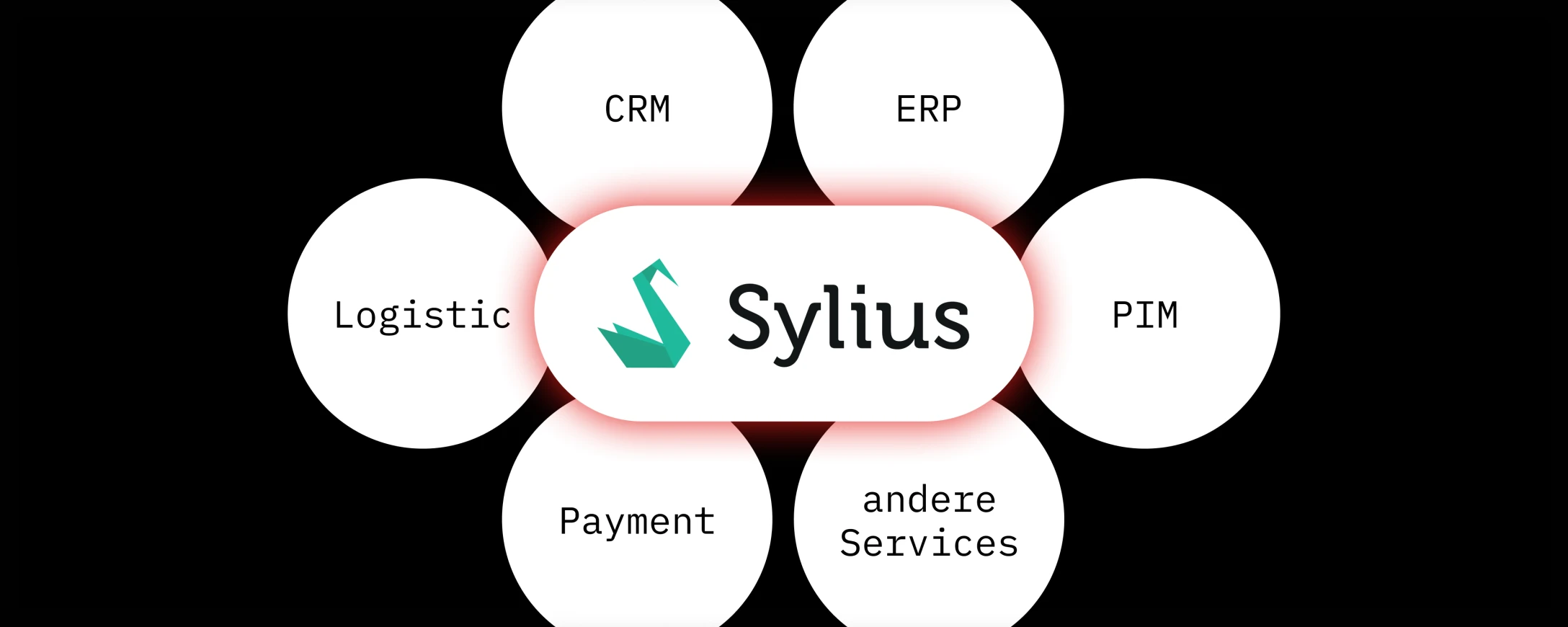
We often talk about Sylius’s modularity. Among experts, a term has become established that hits the nail on the head: Composable Commerce. The idea behind it is simple yet revolutionary: Instead of using a rigid all-in-one system that can do a little of everything but nothing perfectly, you build your e-commerce platform using the best specialized tools available on the market (“best-of-breed”).
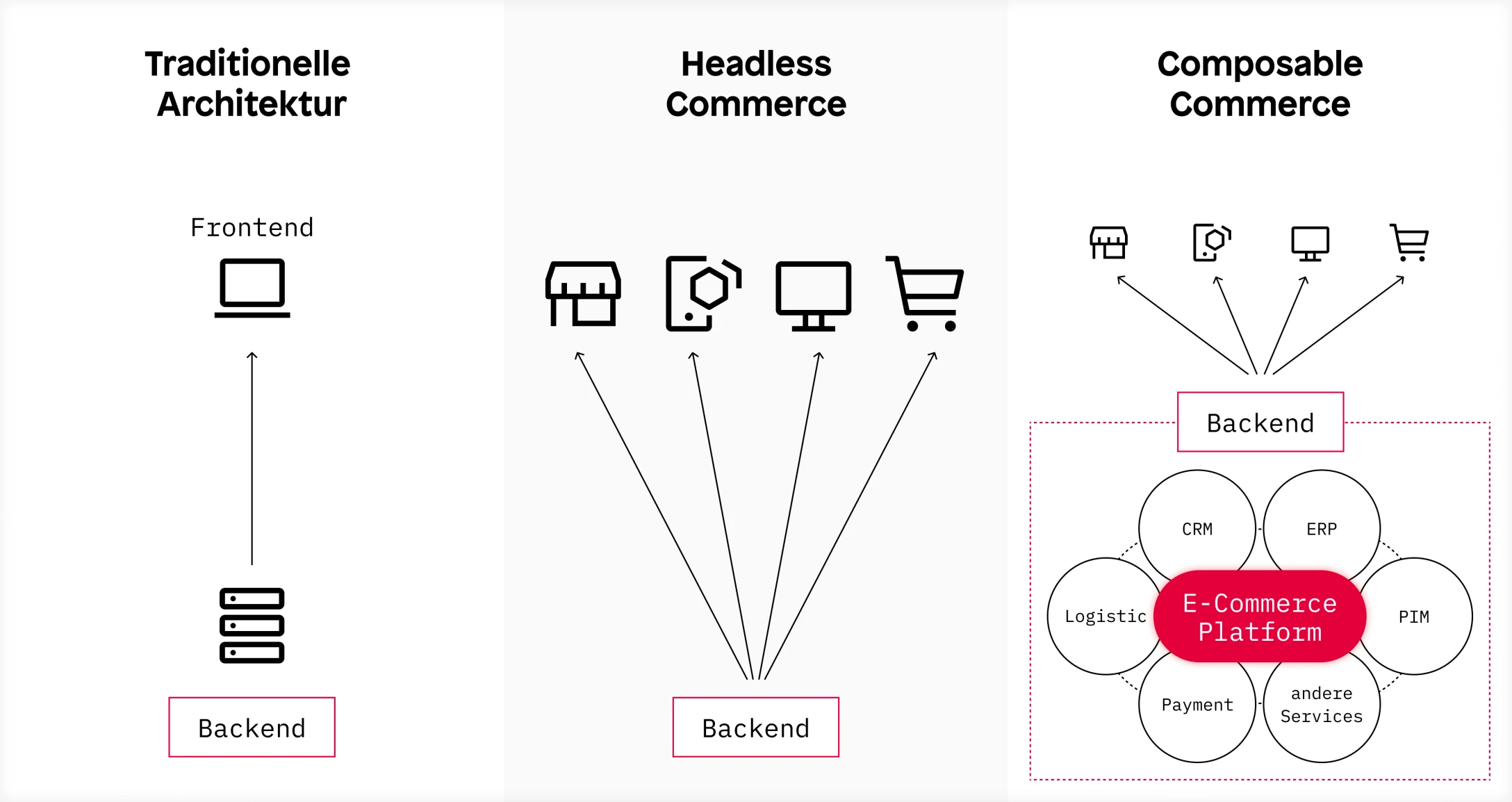
Sylius serves as the powerful backbone here—the pure commerce core. The best solutions for each specific task are then integrated via APIs:
This approach gives companies the freedom to design their infrastructure exactly to their needs and to replace or modernize individual components without having to rebuild the entire system.
The Sylius roadmap is clearly focused on the future, particularly when it comes to AI and headless solutions. But what does that mean specifically for your business?
Artificial intelligence is more than just a buzzword. When integrated into a flexible platform like Sylius, it becomes a decisive competitive advantage. Instead of simple “customers also bought” logic, modern AI integrations enable genuine, personalized experiences:
The term “headless” describes an architecture in which the e Backend (the “body” that contains the data and logic) is decoupled from the front end (the “head,” i.e., the user interface). For your business, this means one thing above all else: absolute freedom across multiple channels.
With Sylius as the central “brain,” you can power an unlimited number of frontends:
All channels access the same central logic for products, orders, and customer data. That is the definition of a true omnichannel strategy.
That’s why we see our role not just as developers who deliver code, but as partners who provide guidance at every stage. Often, this begins even before a project starts: We support companies during their initial evaluations of Sylius, show them how the framework fits into their business model, and help them make the right decisions for the future.