Cancel
Start searching

This search is based on elasticsearch and can look through several thousand pages in miliseconds.
Learn more
The family-owned company BIKAR Metals recognized the competitive advantage of automation and digitization early on.
From the high-bay warehouse to the “BIKAR Zone”—the first fully automated cutting center—the company is pursuing a clear digitization strategy to stay one step ahead of the competition.
Part of this strategy also includes the relaunch of the website, the new customer portal, and a fully integrated online store—all hosted on-premises and powered by a new PIM.
No problem for punkt.de and BIKAR’s IT department!
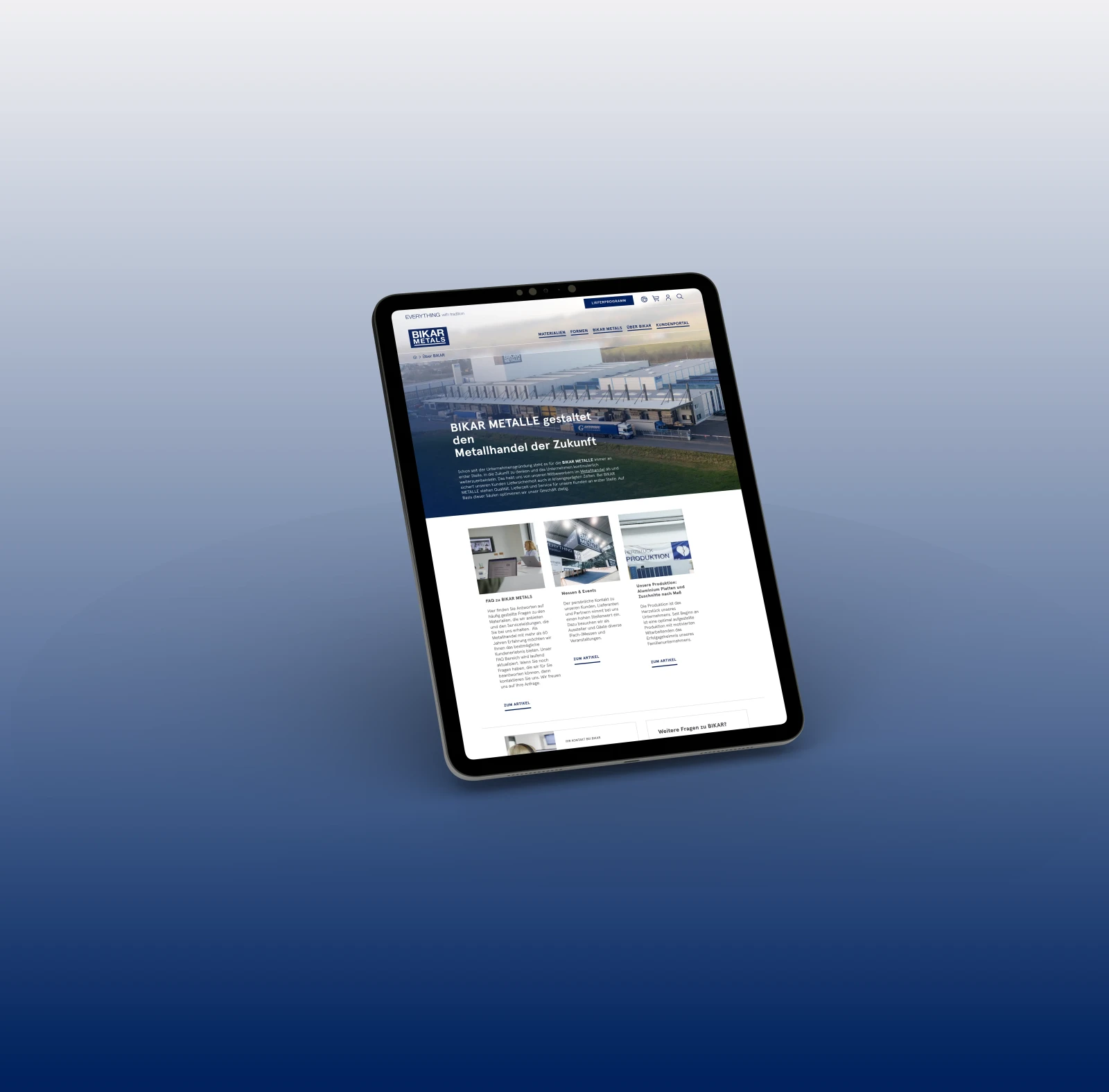
EVERYTHING with tradition—these three words sum up our corporate philosophy. BIKAR Metals is a family-owned company that has enjoyed a very successful history since its founding in 1962. As specialists in the processing of non-ferrous metals and plastics, BIKAR operates on a global scale.
https://www.bikar.com/
As a specialist in the processing of non-ferrous metals and plastics, BIKAR is a company that operates worldwide. Tradition is highly valued at BIKAR, but that does not mean the company is not focused on the future.

BIKAR recognized early on that well-designed automation and digitization offer a genuine competitive advantage. As early as 2000, the company integrated its fully automated high-bay warehouse with its own sawing equipment and intelligent production planning.
To further advance its own digitalization efforts, BIKAR sought the right partner in the summer of 2020 to develop an e-commerce solution, including a customized customer portal. In addition, the website was to undergo a relaunch.
Following initial contact in the summer of 2020 between punkt.de GmbH and BIKAR, as well as further discussions in the fall—which, due to COVID-19, could only take place remotely—the initial framework for the project was established, and the groundwork was laid for a joint workshop at BIKAR in Bad Berleburg.

It quickly became clear that one of the biggest challenges would be integrating the customer portal and the online store into the existing system landscape.
The company’s in-house ERP system, “BIKAR Next,” was to serve as the data source for customer data, while an Akeneo PIM would handle product data. Additionally, it was important to BIKAR that the entire infrastructure be operated on-premises.
It is precisely this combination of specific application requirements and integration into an existing system landscape that constitutes one of the core competencies of punkt.de.
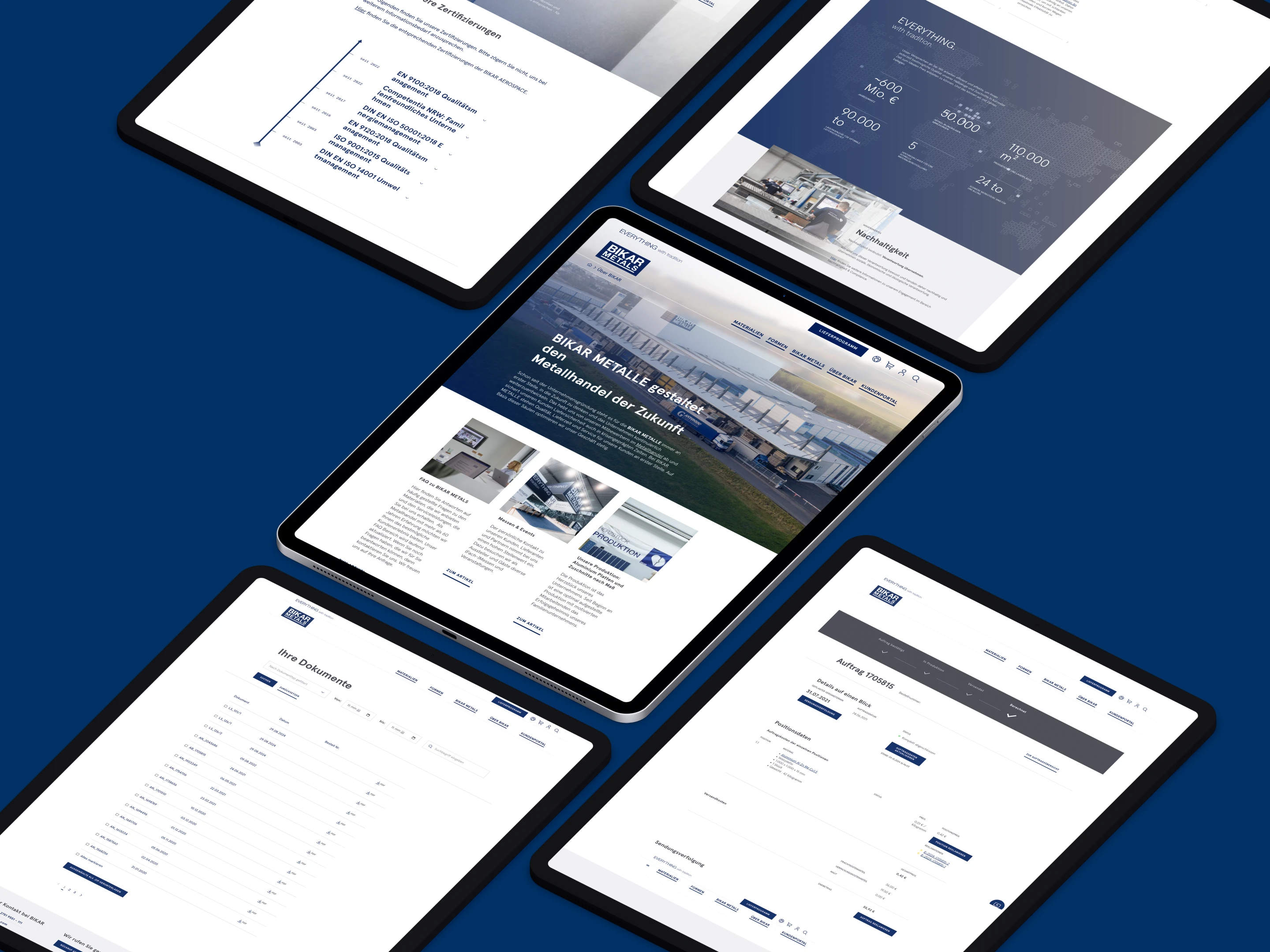
Before we could tackle the three projects—the website, the customer portal, and the online store—it was important to establish a new foundation for design, UI, and UX. As a purely technical agency without in-house web design or specialized UI/UX expertise, we’ve been working very successfully with our partner agency since 2012 made in .
We had already invited our partner agency to the workshop. This paid off immediately during the creation of the “digital design system.” Without the need for a complicated onboarding process for the projects, made in was able to work with BIKAR to create an overarching design system that applies to all three projects. Fonts, styling, colors, graphic elements, and individual components were thus already created as a cross-media design before the actual development began. To avoid additional work during development, our front-end developers are involved in this process from the very beginning.
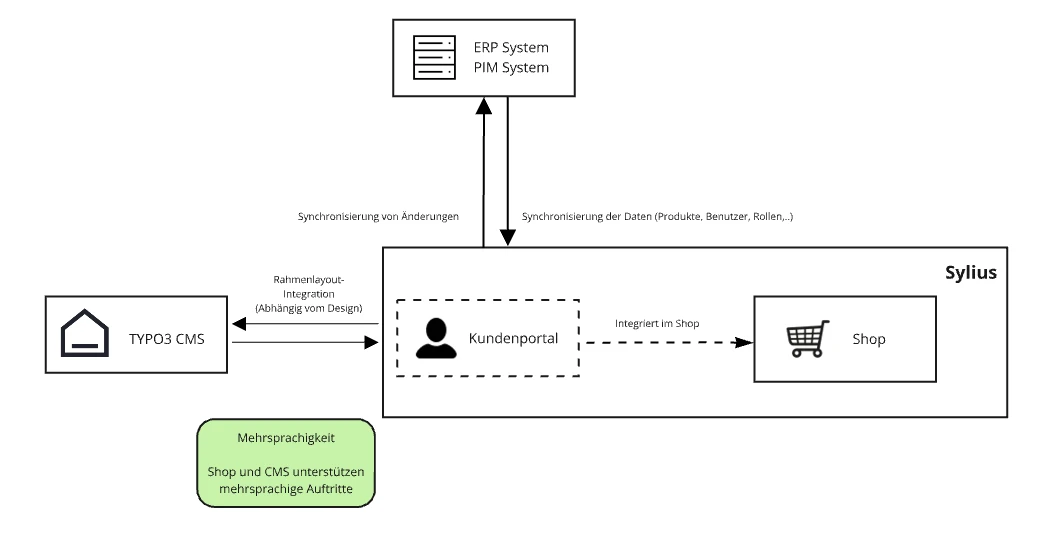
In addition to the visual concepts, we naturally also needed a customized, comprehensive technical plan before actually beginning implementation. The interactions and interfaces between the subprojects were defined and implemented using the appropriate resources within the on-premises infrastructure. The diagram shows the result as it stood at that time and has changed only in a few details since then.
Once the digital design system had been established as a framework that incorporated BIKAR’s corporate design (CD) and corporate identity (CI), work could begin on the actual development of BIKAR’s new website.
We chose TYPO3 as our CMS to display editorial content in multiple languages on the front end , tailored to specific users. Initially, only German and English will be available as language options, though there is always the option to add additional languages later.


The website was developed primarily as a “content site” for static content and designed so that even a small editorial team can work efficiently with the CMS.
One exciting aspect was the implementation of a faceted search based on Elasticsearch, which can access content and products from the online store as well as user-specific data from the customer portal across the entire system.
From the very beginning, BIKAR placed a high priority on the customer portal. The challenge was to reduce the workload on the company’s own sales team while maintaining BIKAR’s high level of service.
Therefore, a key objective was to enable customers to access standard information—such as order status, complaints, and document downloads —on their own via self-service. And all of this at any time, whether during BIKAR’s business hours or on the weekend. To achieve this, it was essential to design an intuitive customer portal that provides real added value for BIKAR’s sales team and customers in an environment where business is traditionally conducted via phone and email.
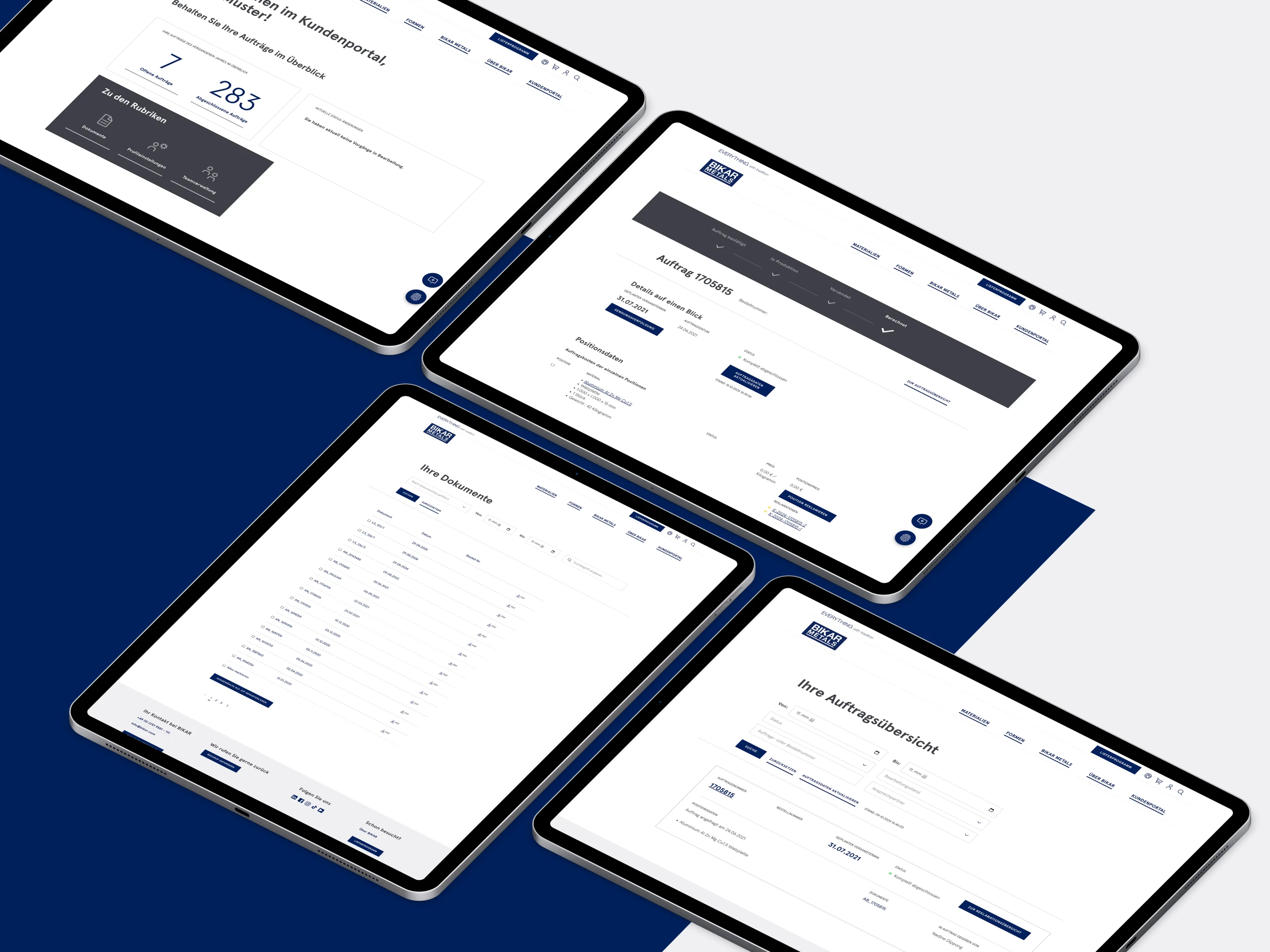
Currently, customers have access to features in the customer portal such as a dashboard, user management for their own employees, order overviews with filtering options and status displays, the ability to submit complaints online directly from the workshop, and the option to download additional documents related to orders.
UI and UX, as well as the performance of the customer portal, play a major role in increasing user adoption. The challenge of covering a wide range of products with numerous product variants required extensive planning before the actual development began.
From a technical standpoint, we leveraged the synergy between the Sylius e-commerce platform and the Symfony PHP framework. The customer portal has therefore been implemented directly within the store as a custom Symfony solution. This strong integration between the store and the customer portal will also simplify many aspects of our future development.
This architecture also makes it easier to connect the various systems—including BIKAR’s proprietary ERP, Akeneo PIM, CMS, and cross-system Elasticsearch search —while simultaneously taking full advantage of the Sylius e-commerce platform.
The ERP system was developed in-house by BIKAR and customized to meet the company’s specific needs. Close coordination with BIKAR’s IT department was essential for the integration, in order to develop the necessary interfaces for the customer portal so that the relevant data from the ERP system is always synchronized accurately and in near real time. To this end, we have created processes and solutions—not only from a technical but also from an organizational perspective—that strengthen the connection between BIKAR and the punkt.de team.

The current PIM did not yet exist when the project began and was implemented in parallel with our project. We supported BIKAR in its decision to choose Akeneo as the PIM system and used our network to help find the right expertise for the Akeneo implementation. Akeneo is ideally suited for managing large volumes of product data and integrating it into connected systems such as the customer portal and online store. While BIKAR was implementing the PIM, we developed the corresponding interfaces in parallel.
Once the data from the ERP and PIM systems was available, the customer portal was continuously optimized and prepared in several phases so that it could be tested by BIKAR with a select group of customers during a pilot phase, while also involving BIKAR’s own sales team at an early stage.

Another project following the relaunch of the website and the customer portal is the BIKAR online store. To complement traditional sales channels, the goal was to create a way for customers to easily order metal and plastic products from BIKAR.
In principle, this sounds very simple, but in a complex product landscape with countless product variants —including custom cuts—it presents several challenges. In particular, prices for non-ferrous metals, unlike those for ordinary products, are highly volatile and must be calculated on a case-by-case basis.
Using Sylius, a Symfony-based e-commerce framework, we are currently working with BIKAR to build the online store. The customer portal and online store are designed to integrate seamlessly and blend visually. The real magic of digital transformation happens behind the scenes, in the interplay between the customer portal, PIM, ERP, and website.
The goal is to map out the entire process —from ordering to cutting the metal or plastic part and on to delivery—and to consolidate it transparently for the customer in one place.
Following the launch of the customer portal, this project is now in full swing, so BIKAR’s customers will be able to enjoy additional store features in 2025.
What began as a challenging project amid the difficult conditions of the COVID-19 pandemic evolved into a deep and trusting partnership between BIKAR Metals and punkt.de. From the initial discussions through the entire development phase, openness and trust were at the heart of our collaboration. Although the initial discussions took place exclusively remotely—which was a challenge for many at the time—we were quickly able to build a solid foundation that goes far beyond a typical client relationship.
Regular exchanges between our development teams, mutual visits, and joint participation in events such as Sylius Days 2024 in Mannheim underscore the strength of this partnership.
Our technical expertise and a work environment characterized by respect and openness have enabled us to successfully support BIKAR on its path to digital transformation. This collaboration lays the foundation for many more joint projects in which trust and innovation will go hand in hand.