Cancel
Start searching

This search is based on elasticsearch and can look through several thousand pages in miliseconds.
Learn more

Digitize quickly—that’s the order of the day during the COVID-19 pandemic. I recently hosted a webinar for Bitkom titled “Retail in the Age of the Coronavirus Crisis,” in which I shared many tips based on my experience. Here are what I consider to be the most important aspects—whether you have your own brick-and-mortar store and want to enter the world of e-commerce, or you want to launch or expand an online store.
First, you should ask yourself whether you want to remain digital even after the crisis. I kriegoften hear people say, “Of course!”, but many don’t really mean it. Whether you’re forced to go digital because of the crisis or are generally thinking about your digital transformation, be aware that digital transformation always requires ongoing maintenance and further development.
It’s challenging if you already have a large product portfolio, for example as a retailer. In this case, it pays to set priorities when entering the online world and focus on your core product first.
And getting started doesn’t have to be that complicated. Take Meder, for example: This Frankfurt-based brick-and-mortar store sells household goods, toys, and model-making supplies. Its core business caters to the typical “Saturday shopper” in the city—people who pop into the store to browse and find inspiration. During the COVID-19 crisis, they managed to bring this experience online with an extremely streamlined digital strategy: they ran Facebook ads and offered guided tours of the store via video chat. This allows parents, for example, to ask questions about how to keep their children entertained at home. In this way, the company’s core expertise is brought into the online world. Of course, such an initiative takes time to gain traction, but the feedback has been very positive—and the conversion rate very high.
Another example of “thinking outside the box” when it comes to digitalization: A shoe store in Delmenhorst filled its storefront windows with shoes and labeled them with numbers. Then customers could call, receive expert advice—such as how the size compares to other shoes—and place an order right away. As you can see, sometimes “online” retail doesn’t even require online tools!
I recommend clarifying the following questions:
Here are a few tips to help you get your “online store” project off to the right start—not just during the pandemic:
Much of this applies not only during the COVID-19 pandemic, of course, but perhaps these points are especially important right now—and a good motivation to take your entry into the world of online retail seriously and get it right.
There are countless online store providers out there—ranging from "click-and-build" platforms to agencies that implement custom solutions. Here you'll find the most important solutions and the pros and cons of each.
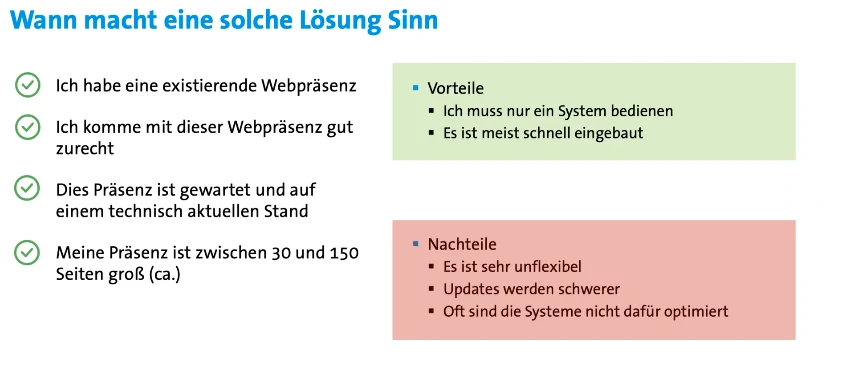
This solution is a good option if you have an existing website and are comfortable using its system. In that case, you can use systems such as Aimeos , which integrate a store into your TYPO3 website.
A separate, standalone online store is a clean solution—you can build it from scratch and won’t have to deal with compatibility issues between systems, complex updates, and so on. However, the transition between the website and the online store is often difficult for customers. Here, you need to pay very close attention to good user guidance, explanations, and so on, to at least mitigate the problem.
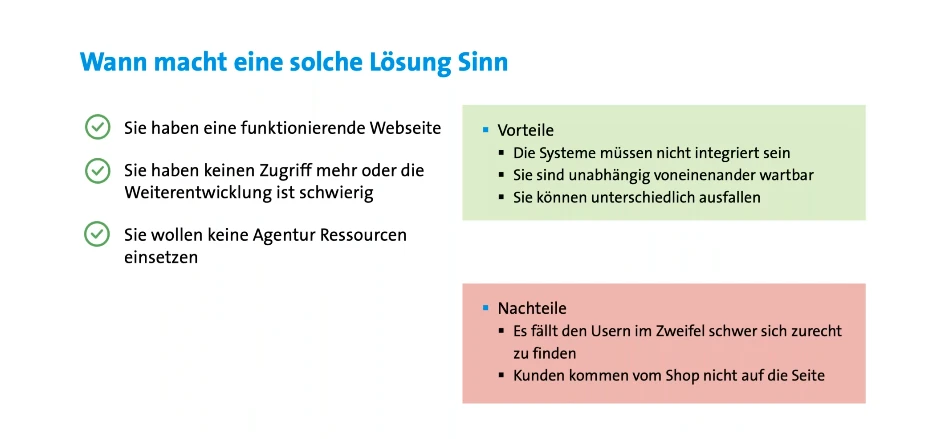
These modular systems allow you to “click together” an online store and thus offer the fastest and easiest way to get started. Of course, depending on the system, there are also limitations—it’s entirely possible that you’ll be dissatisfied with the design, that an important feature is missing, or that you won’t be able to fully implement your vision for user navigation. But the clear advantage is speed—and especially during the COVID-19 pandemic, things sometimes just have to happen quickly.
The most powerful solution is undoubtedly the full, seamless integration of a shop system into your website system. Typically, you’ll need an agency like ours to do this. But then there are no limits: Is your shop content-driven, and do you want to sell products directly from articles and content? No problem. Do you sell paid digital content, operate a “freemium” model, and need complex, automated rights management? Or do you simply want to combine website content with e-commerce content for the best possible user experience? Projects like these—and others like them—can be implemented using the open-source framework Sylius, for example— punkt.de is an official partner. Of course, a solution like this requires significant effort and can’t be set up overnight. In return, you get maximum flexibility, and virtually anything is possible.
E-commerce marketing is, of course, a topic in its own right and can only be touched upon here. Even in this area, you can venture off the beaten path during the pandemic and, for example, see what promotions are running in local newspapers that you can participate in. Furthermore, there are now many platforms specifically designed to support local businesses—feel free to sign up for all of them, since there isn’t currently a single “market leader” among them. By the way, you’ll find a very useful overview on Jimdo.
Whether in person or via video chat, communication is always happening—and with it comes the potential for word-of-mouth marketing. Here, it pays to present your story in bite-sized chunks—what’s there to share? What’s the story behind your shop and your idea?
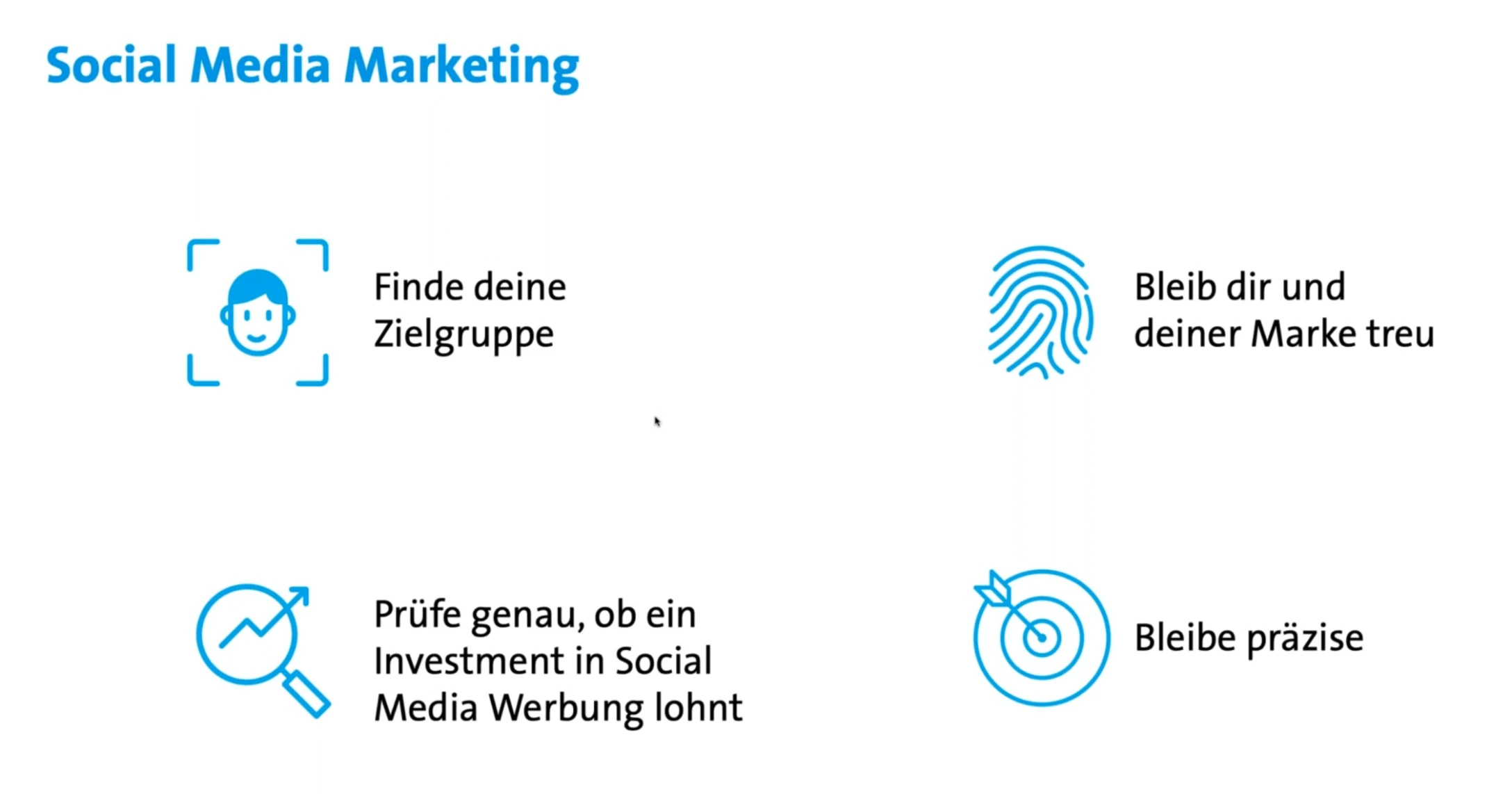
Last but not least, a word about social media marketing: Even in times of crisis, it’s important to carefully consider where you want to be active, what’s truly worth your effort, and what the balance is between costs (time and money) and benefits. Above all, you should stay true to your brand there as well.
I hope these tips have inspired you to take a positive step toward digitizing your business—especially during the COVID-19 pandemic—and to learn more about the topics I’ve only been able to touch on here. If you have any questions, please feel free to reach out to me!