Cancel
Start searching

This search is based on elasticsearch and can look through several thousand pages in miliseconds.
Learn more
Content commerce can increase sales and conversion. What solutions are available? And should you link CMS and online store, for example in Neos or TYPO3?

Marketing via content commerce is particularly suitable for niche products or high-priced offers. This means linking content marketing and webshop: with useful content you attract visitors to whom you offer suitable products directly on the site. This allows you to reach customers who are already interested in the products on offer and who perceive the link to the store as a service. Digital products such as e-books, whitepapers, digital subscriptions etc. also call for content-driven marketing.
For example, a content page that describes a specific product or provides a product overview could display a buy link directly in the article that leads to the product in the online store. Or suitable products could be displayed automatically. The possibilities are very diverse.
Rights management also plays a role with digital products: how can you ensure that customers have access to the content they have purchased?
The most sensible and effective approach is to intelligently integrate CMS and webshop for content commerce. This allows the best of both worlds to be used and shoppable content to be generated. In addition, the user experience - from the content to the checkout process - can be designed to promote sales.
Depending on whether you use a CMS such as TYPO3 or Neos as a basis or an online shop system, the question arises as to how to bring the two together:
The cross-channel marketing of content, for example in the form of newsletters, subscriptions or even print products, is also linked to this. Here it pays to set up the system from the outset in such a way that much can be automated and valuable content can be used optimally, i.e. on several channels.
The cross-channel aspect in particular is becoming increasingly important. Today, content is played out via web, app, newsletter, etc. in order to meet all user needs and reach the target group in the best possible way. Tablets, SmartTV and e-books are also used. A technically clean and automated solution for playing out the content is indispensable here. And if the ultimate goal is to sell products from an online store, careful consideration must be given to how the store and the content offering come together.
In our experience, the best solution for successful content commerce and the combination of content and store, of useful content and products, is the close integration of CMS and online store.
There are several approaches to this. For TYPO3, for example, we have had positive experiences with Aimeos . For larger or individual projects, we work with an API-based solution. This is where Sylius comes into play.

With the help of the Sylius store framework, complex e-commerce applications can be implemented and interwoven with the CMS. Here is an example of the possibilities offered by API-based communication between the store and CMS:
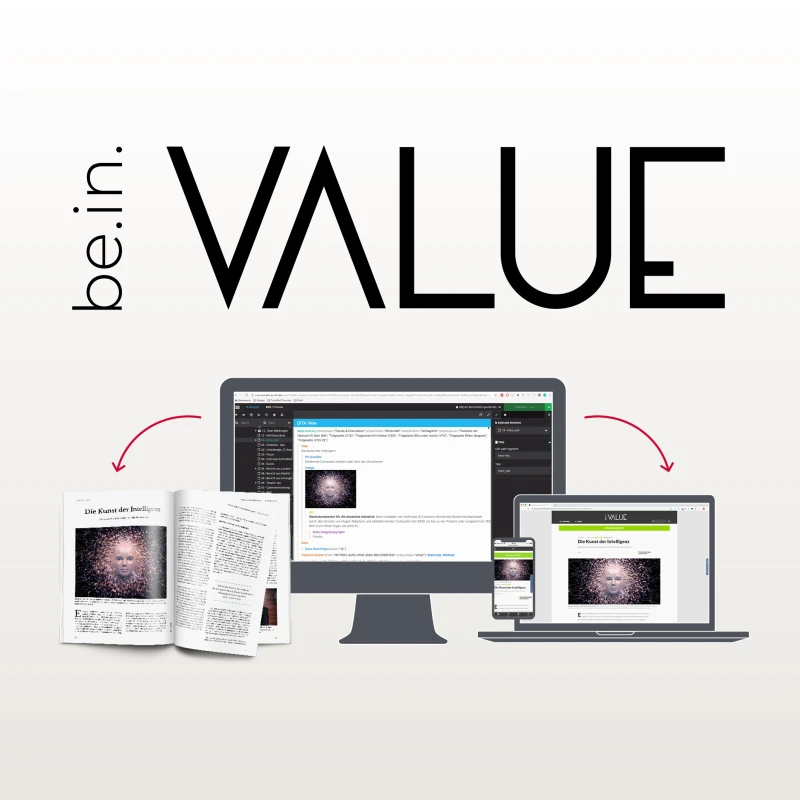
The be.in.value platform from VVW-Verlag, which we implemented with Sylius and Neos, shows what this can look like in practice. The site is strongly content-driven, with digital information products and physical products such as books displayed in the right context. The portal is also characterized by a subscription model with various subscription plans and thus access rights to content.
Sylius is a future-oriented technology and is particularly interesting for webshop operators who are still working with old systems or confusing patchwork and want to put their store on a new footing. This is because the technology is very clean, easily expandable and scalable and ensures excellent integration into the CMS.
Sylilus is also a good choice for anyone who is setting up a new online store or wants to add a store to an existing content-driven platform.
We would be happy to support you in setting up or converting your web store and in the effective use of content commerce.


Marketing via content commerce is particularly suitable for niche products or high-priced offers. This means linking content marketing and webshop: with useful content you attract visitors to whom you offer suitable products directly on the site. This allows you to reach customers who are already interested in the products on offer and who perceive the link to the store as a service. Digital products such as e-books, whitepapers, digital subscriptions etc. also call for content-driven marketing.
For example, a content page that describes a specific product or provides a product overview could display a buy link directly in the article that leads to the product in the online store. Or suitable products could be displayed automatically. The possibilities are very diverse.
Rights management also plays a role with digital products: how can you ensure that customers have access to the content they have purchased?
The most sensible and effective approach is to intelligently integrate CMS and webshop for content commerce. This allows the best of both worlds to be used and shoppable content to be generated. In addition, the user experience - from the content to the checkout process - can be designed in such a way that it promotes sales.
Depending on whether you use a CMS such as TYPO3 or Neos as a basis or an online shop system, the question arises as to how to bring the two together:
The cross-channel marketing of content, for example in the form of newsletters, subscriptions or even print products, is also linked to this. Here it pays to set up the system from the outset in such a way that much can be automated and valuable content can be used optimally, i.e. on several channels.
The cross-channel aspect in particular is becoming increasingly important. Today, content is played out via web, app, newsletter, etc. in order to meet all user needs and reach the target group in the best possible way. Tablets, SmartTV and e-books are also used. A technically clean and automated solution for playing out the content is indispensable here. And if the ultimate goal is to sell products from an online store, careful consideration must be given to how the store and the content offering come together.
In our experience, the best solution for successful content commerce and the combination of content and store, of useful content and products, is the close integration of CMS and online store.
There are several approaches to this. For TYPO3, for example, we have had positive experiences with Aimeos . For larger or individual projects, we work with an API-based solution. This is where Sylius comes into play.
With the help of the Sylius store framework, complex e-commerce applications can be implemented and interwoven with the CMS. Here is an example of the possibilities offered by API-based communication between the store and CMS:
The be.in.value platform from VVW-Verlag, which we implemented with Sylius and Neos, shows what this can look like in practice. The site is strongly content-driven, with digital information products and physical products such as books displayed in the right context. The portal is also characterized by a subscription model with various subscription plans and thus access rights to content.
Sylius is a future-oriented technology and is particularly interesting for webshop operators who are still working with old systems or confusing patchwork and want to put their store on a new footing. This is because the technology is very clean, easily expandable and scalable and ensures excellent integration into the CMS.
Sylilus is also a good choice for anyone just setting up a new online store or looking to add a store to an existing content-driven platform.
We would be happy to support you in setting up or converting your web store and in the effective use of content commerce.